2026 Nevada Elk Application Guide
Nevada elk doesn’t get nearly the credit it deserves. Most people don’t even realize some of the absolute biggest bulls in the world live just a few hours outside Las Vegas. if you ever draw a Nevada elk tag, it likely will be the best elk hunt you ever do.
The problem is drawing the tag.
Draw odds for non-resident elk in Nevada are some of the most brutal in the country. We’re talking below a tenth of a percent at zero points for most top-tier units. Even at max points — 33 years of applications — the best units still hover under 2% for most weapon types. There’s a real chance most of us never draw. That’s not a reason to stop applying. It’s just the honest picture.
This is episode three of our Nevada application series. If you haven’t listened to the mule deer and antelope episodes yet, I’d recommend starting there. Your decision on whether to apply for Nevada elk should really hinge on your answer coming out of those first two episodes.
Is Nevada Elk Worth Applying For?
It depends entirely on what else you’re doing in Nevada.
If you’re already applying for Nevada mule deer or Nevada antelope, then adding elk is a $19 lottery ticket for one of the best elk hunts in North America. That’s not an exaggeration — when you look at what people are paying for comparable elk experiences at the Western Hunting Expo, some of those tags go for tens of thousands of dollars. Nevada has units that compete with that caliber of opportunity on public land.
If you’re not applying for anything else in Nevada, the math changes. You’re now buying a $155 non-resident license plus a $19 application fee, just to apply for one species. That’s a $174 entry point for a tag you probably won’t draw for decades, if ever. Whether that’s worth it depends on your overall strategy and how much Nevada fits into your long-term plans.
I don’t want to talk you into or out of applying, I just want to make sure you’re going into it with the right expectations. If you aren’t sure whether it’s worth applying, check out our Nevada Mule Deer Strategy first!
What The Nevada Elk Herd Looks Like
The reason people keep applying is what’s on the other side.
Some of Nevada’s top elk units are producing bulls that belong in the same conversation as the best public land opportunities in the entire country. Units 111 through 115 are the most well-known — these are the units where 90 to 100 percent of harvested bulls score six points or better, where rifle success rates push 70 percent, and where even archery hunters are connecting at 60 percent. These aren’t statistics from a private ranch. These are wild elk on public land. Wild elk with the change to hit the magical 400” mark.
The 221 through 223 series is right behind them. Slightly lower on average bull size but still exceptional by any standard, and similar tag numbers going out each year.
Some other units worth knowing — 231, 104, 108, 121 — are all capable of producing 350-inch class bulls. These aren’t the top shelf, but they’re well above average by any objective measure.
I’d put Utah at the top for total elk production just because there are more elk there. The sheer number of Boone and Crockett entries out of Utah reflects a bigger overall herd. But for top-tier public land tags available to non-residents, Nevada’s best units match or beat almost everything else available.
The Nevada Elk Draw Odds
At zero preference points
Every weapon type in every top Nevada elk unit is below a tenth of a percent for non-residents. That includes archery, muzzleloader, early rifle, and late rifle.
At 10 points
Archery odds in the best available units are still below 2 percent. Muzzleloader tops out around 1.5 percent. Early and late rifle sit under 1 percent for top units. These are not good odds. That’s the reality.
At max points (33)
Archery in a select few units can reach 8 to 9 percent. That’s the ceiling. The top-tier units like 111 through 115 are still under 1 percent at max points. The 221 to 223 series sits around 2 percent best case at max points. There are non-residents who will build 33 years of points and still not draw a tag.
If you’re already applying in Nevada for antelope or mule deer - its a pretty cheap lottery ticket. If you aren’t, it’s a pretty expensive lottery ticket.
Either way, it’s a lottery ticket.
How to Choose Your Five Units
Nevada gives you five unit choices when you apply. Here’s how I’d think about filling them out.
If your goal is to hunt the best possible unit if you ever draw, I’d load up most of your choices on the top-tier units. That’s 111, 112, 113, 114, 115, 221, 222, 223. These are the reason people apply in the first place. If you’re going to Nevada, make it worth the trip.
Your fourth or fifth choice is where you can take a slightly different approach. Units 62, 64, 66, and 67 carry meaningfully better draw odds while still producing 350-inch bulls. These aren’t consolation prizes — they’re still excellent elk hunting. If drawing sooner matters more to you than holding out for the absolute best, one of those is a reasonable pick.
My personal approach would be to stack three or four of my choices on the top-tier units and maybe use one slot on a higher-odds unit. But honestly, if I’m committing to Nevada at all, I’d rather wait for something exceptional than draw a tag that feels like settling.
FIND THE RIGHT UNIT FASTER
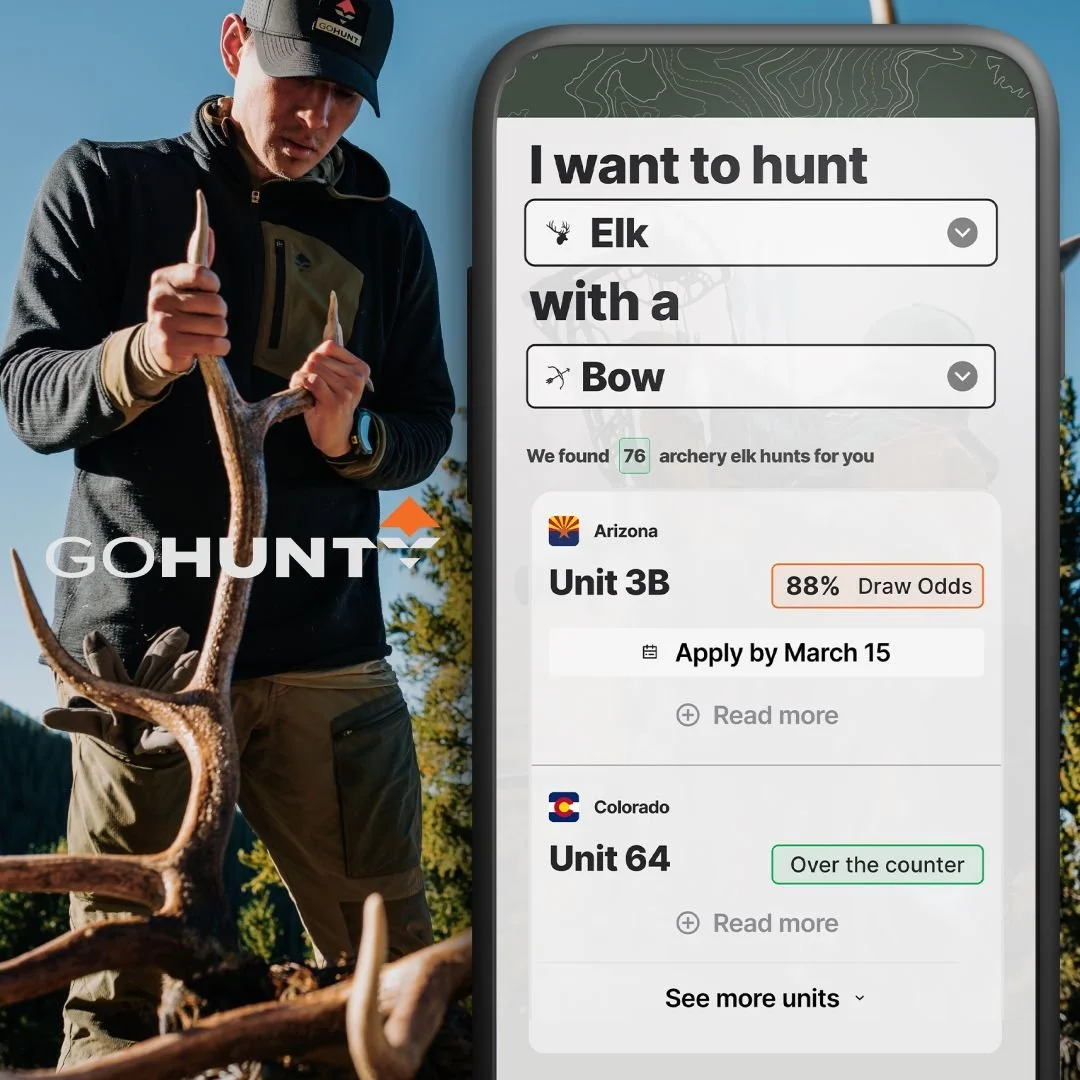
GOHUNT's Filtering 2.0 gives you the data you need for every unit across the west, on both mobile and desktop.
Use code DRAWNWEST to get $50 of gear shop credit when you sign up for INSIDER.
Key Dates and Logistics
The Nevada deadline is May 13th at 11pm Pacific time. Same as the other species in the state — don’t miss it.
Group applications work the same way they do for mule deer and antelope. You can mix residents and non-residents in a group, but the non-resident tags have to come from the 10 percent of tags allocated to non-residents. If a unit only has one non-resident tag available and you’re in a group of three, you’re not drawing. Mixing residency doesn’t improve anyone’s odds either.
Tag fee for non-resident elk is $1,200 once you draw. That sounds steep until you compare it to what other states are trending toward. Montana is approaching the same range. Wyoming and Colorado are closing in on $1,000. Wyoming’s special elk tags are already past $2,000. For what Nevada delivers if you draw, the $1,200 is worth it.
The Secondary Draw and Leftover Lists
There’s one more option that not enough people pay attention to — the leftover and return tag lists.
Nevada runs a secondary draw on June 26th. Beyond that, tags do get returned throughout the summer. Someone draws a top-tier Nevada elk tag, then finds out they need back surgery, and they return the tag rather than burning their points on a hunt they can’t enjoy. That tag shows up on the Nevada Division of Wildlife website.
If you’re serious about Nevada elk, checking that site through the summer is genuinely worth your time. People have picked up leftover tags in exceptional units with far fewer points than it would normally take to draw. It’s not common, but it happens — and you won’t know about it unless you’re looking.
One More Episode in the Series
This wraps up our elk breakdown for Nevada. There’s one more episode in the Nevada series coming, covering goat, sheep, and moose. If you’re already applying in Nevada, you’ll want to hear that one. Same reasoning applies — if you’re buying the license anyway, those species become very low-cost lottery tickets.
Make sure you’re subscribed so you catch it when it drops.
If you’re still trying to decide on whether you should apply, check out our Nevada Antelope Application Guide next!
Wrapping Things Up
Nevada elk is the kind of thing that western hunters dream about. If you do draw — and some people do — it’s the hunt you’ll talk about for the rest of your life. Units on par with or better than the best public land elk hunting in the country.
If you’re already in on Nevada because of the mule deer or antelope, add elk. It’s $19 and it belongs in your portfolio. If you’re not, be honest about whether the $174 entry for one species fits what you’re trying to build.
Either way, go listen to the full episode. We walked through every unit category, the actual draw numbers, and how I’d fill out my five choices if I were applying today.
STAY IN THE LOOP
Draw dates, results, and strategy — we'll send it straight to your inbox so you're never caught off guard when a deadline hits.
DIVE DEEPER ON THE PODCAST
We go further on topics like this every week — more detail, more context, and real talk about what it takes to hunt the West. Subscribe and take it with you.
FOLLOW DRAWN WEST
Follow the podcast on your favorite platform and stay up to date on every new episode.


Nevada elk draw odds are brutal. But if you’re already applying for mule deer or antelope, adding elk is a $19 lottery ticket for one of the best elk hunts in North America. Here’s how to think about it.