2026 Arizona Elk & Antelope - Is It Worth It?
Every year about this time, Arizona sneaks up on people. The deadline hits fast, the system isn’t exactly simple, and if you haven’t thought through your strategy ahead of time, it’s easy to either rush an application or skip it entirely.
If you’re a non-resident trying to decide whether Arizona elk or antelope belongs in your 2026 western plan, here’s the short version: the deadline to apply is February 3, 2026 at 11:59 PM Arizona time.
This guide walks through everything you actually need to know — how much Arizona really costs, how the draw works, what kind of elk and antelope opportunity exists today, and whether applying makes sense for where you’re at in your point-building strategy.
Let’s break it down.
Arizona Application Deadlines & Upfront Costs
Arizona requires a valid hunting license to apply. For non-residents, that license costs $160 and is valid for 365 days from the date of purchase. Youth licenses are only $5, which makes Arizona one of the cheapest states in the West for kids to build points.
Here’s an important strategy note that gets overlooked all the time. Because the license lasts a full year, if you buy it at the very end of the application window — February 2nd or 3rd — you can often use that same license to apply again the following year. If you do this every other year, you effectively cut your annual license cost in half.
Once you have a valid license, it’s a $15 application fee per species. If you’re applying for elk, antelope, and deer in the same year, Arizona can actually be cheaper than many states once you spread that license cost across multiple species.
If you draw a tag, costs are relatively reasonable compared to other western states. A non-resident elk tag runs about $650, while an antelope tag costs $550.
Weather, Drought, and Its Impact in Arizona
Arizona is a desert state, and that matters more here than almost anywhere else. Elk and antelope herds are heavily influenced by winter moisture and summer monsoons. Good moisture years build feed and carry animals through tough seasons. Bad drought years stack the deck against them.
Looking back over the last several years, Arizona has bounced between drought and recovery. After some rough drought years earlier in the decade, conditions going into 2026 look relatively stable, especially across core elk country. That’s a good sign for calf recruitment, antler growth, and overall herd health.
If you’ve been sitting on Arizona points for a while, this is the kind of year you’d want to pay attention to.
How the Arizona Draw System Works
Arizona uses a modified bonus point system. It’s not as chaotic as Wyoming, but it’s still confusing if you’ve never dug into it.
Bonus points are species-specific. Elk points only help elk, antelope points only help antelope. Applicants who have applied for five consecutive years earn a loyalty bonus point, and anyone who completes Arizona’s in-person Hunter Education course receives a permanent bonus point for that species.
The draw itself happens in two passes. In the first pass, a portion of the permits are awarded to applicants with the highest point totals. In the second pass, the remaining permits are issued through a weighted random draw, where your number of bonus points determines how many chances you get in the lottery.
That system means everyone always has a chance. Someone with one point can still draw. Someone with twenty points can still miss. Points improve your odds, but they never guarantee success unless you’re at the very top.
Non-residents are capped at drawing up to five percent of the permits for any given hunt. Those tags are not reserved for non-residents, but once that cap is reached, the rest go to residents.
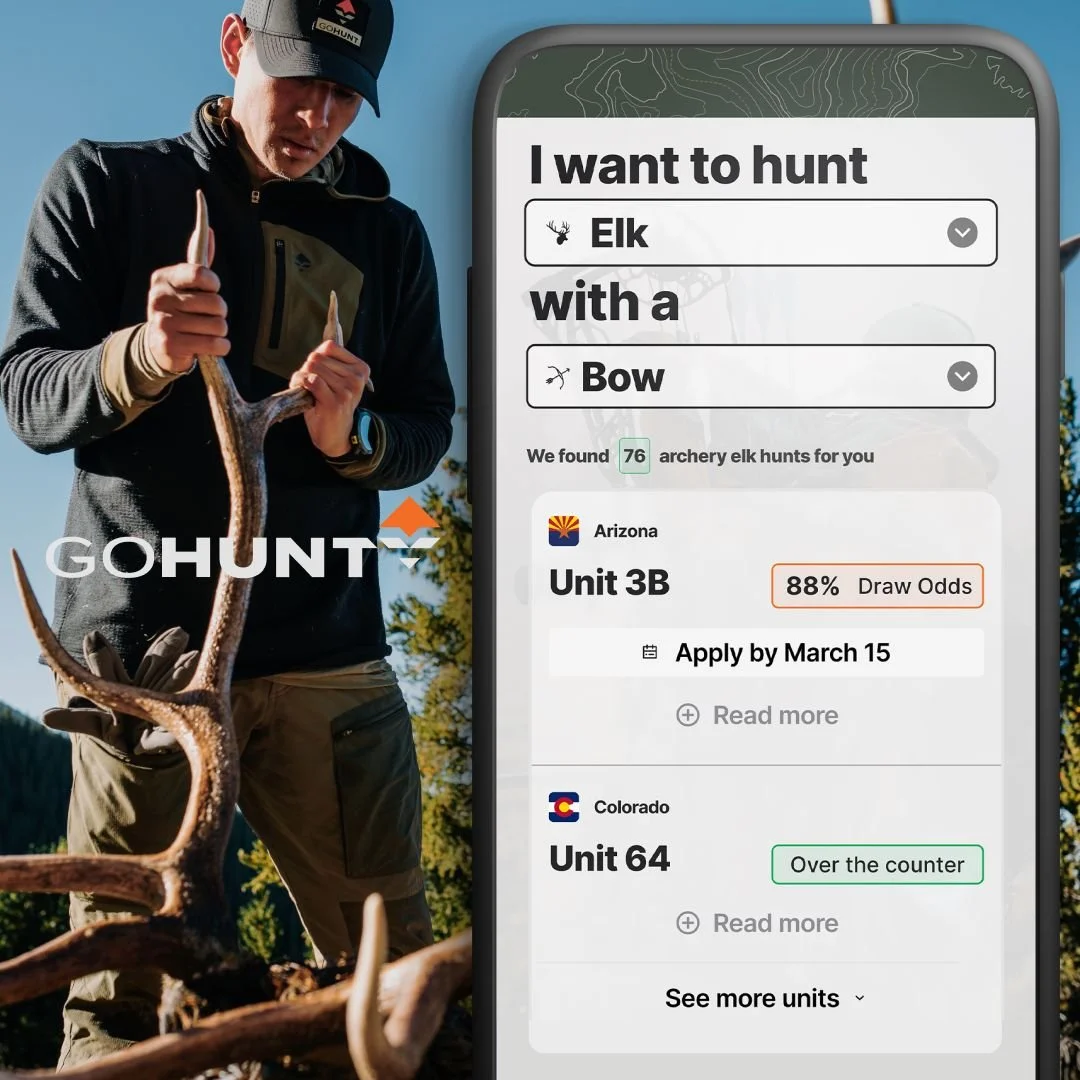
Want the best draw odds available for Your applications?
Check out GOHUNT Insider for the most accurate draw odds available for Arizona and ALL your states this application season.
Use code DRAWNWEST when you sign up to get $50 in free gear shop credit!
Group Applications in Arizona
Arizona handles group applications very differently than Wyoming.
Groups can apply together, but points are averaged and then rounded to the nearest whole number. That rounding can help you or hurt you depending on where your group lands, so it’s worth running the math before you apply.
The bigger issue is that Arizona does not over-allocate permits for groups. If there are fewer permits available than people in your party, your application will not be considered. This becomes critical in units where the non-resident cap is only two or three tags. In those units, a party of four has zero chance — even if you’d be first in line.
This is one of the most common mistakes people make in Arizona.
How Good Is Arizona Elk Hunting Right Now?
Arizona still has a reputation as a trophy elk state, and in many ways, that reputation is earned. There are still bulls pushing 380 to 400 inches taken every year.
That said, Arizona isn’t quite what it was fifteen years ago. Age class has come down slightly in many units, and giant bulls are harder to come by. That doesn’t mean the hunting is bad — it just means expectations need to be realistic.
Where Arizona still shines is in that mid-range trophy window. Units with 330 to 360-inch potential are more accessible here than in many other western states. If you’re willing to hunt late archery or late rifle seasons, work hard, glass a lot, and grind through tough conditions, Arizona can get you into excellent elk country in the five to ten year range.
That’s faster than many comparable opportunities elsewhere.
Should You Apply for Arizona Elk?
In my opinion, Arizona makes the most sense as a mid-term elk state.
If you’re hoping for early archery bugle-fests or early rifle hunts, you’re realistically looking at fifteen-plus years of points, and often much longer. But if you’re comfortable targeting late archery or late rifle hunts, decent odds start showing up sooner.
For most non-residents, three to five years of points puts you into a range where you can begin planning around real odds instead of pure luck. Five to ten years opens up some genuinely strong opportunities.
If you’re already applying for multiple species and using the license-splitting strategy, Arizona elk is absolutely worth keeping in the mix.
How about Antelope -Is Arizona Worth It?
This is where I’m far less bullish.
Arizona antelope tags are expensive, draw odds are brutal, and even applicants with double-digit points are often sitting at single-digit odds. While Arizona does produce some excellent antelope, the return on investment simply doesn’t line up for most non-residents.
As a standalone strategy, I don’t recommend building points in Arizona just for antelope. You can access comparable or better antelope hunting in states like Wyoming, Montana, and Colorado with far fewer years invested and significantly lower costs.
That said, if you’re already applying for elk or deer in Arizona, antelope becomes a cheap lottery ticket. At that point, you’re essentially adding a $15 application onto a license you already planned to buy. If you’re going to roll the dice, I’d aim high and apply for a unit you’d be thrilled to draw, even if the odds are long.
It does happen. People draw these tags every year.
Final Thoughts on Arizona for 2026
Arizona elk and antelope applications close fast, and this is very much a turn-and-burn deadline.
If elk fits your mid-range strategy and you’re comfortable with tough late-season hunts, Arizona deserves a spot in your plan. Antelope, on the other hand, only makes sense as an add-on — not a standalone points play.
Just don’t forget the deadline: February 3, 2026 at 11:59 PM Arizona time.
Until next time — stay drawn.
Don’t miss what’s coming next
Be the first to hear about application deadlines, new gear worth paying attention to, and occasional giveaways. Join 4,000+ hunters who get the Drawn West Newsletter and stay one step ahead of the season!



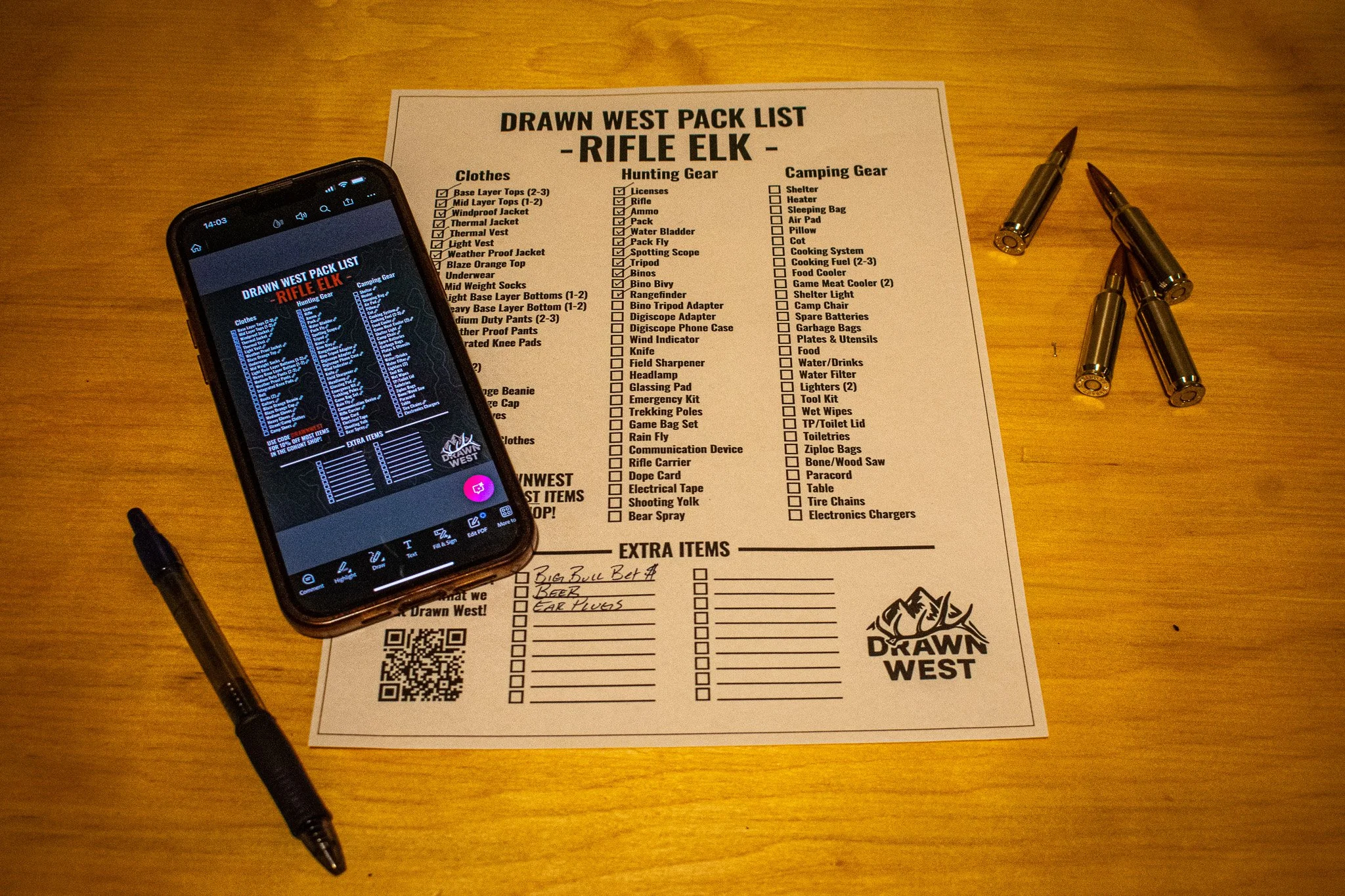
It’s hard to know what calls are worth putting in your pack, especially on your first hunt. Here's what's in my pack, why I run a diaphragm 3-pack as the foundation, and when to reach for backup options like the Hoochie Mama or EZ Estrus.