Getting Into Trapping: A beginners Guide
Most people don’t decide to get into trapping. It sneaks up on them.
This article is based on Drawn West Podcast episode 42 - listen to the full episode on your favorite platform:
Apple | Spotify | YouTube | Web
One day you’re scrolling trail cam photos, noticing the same raccoon at the same hour, or watching a fox work the edge of your property like it owns the place. Then suddenly you’re pricing traps, reading regulations at night, and realizing this is a whole world you’ve never stepped into.
That’s exactly where I found myself. Not because I wanted to be a “trapper,” but because trapping became the next logical step in understanding the land I live on and the animals moving through it.
This episode was a collab between Drawn West and Okayest Trapper, and it wasn’t about teaching trapping from a textbook. It was about what actually happens when a non-trapper tries to get started, makes mistakes, overthinks things, and slowly realizes why so many people get hooked for life.
Why So Many People Never Start Trapping
Trapping carries a strange reputation. To some people, it sounds primitive and reckless. To others, it feels overly complicated, guarded by unwritten rules and strong opinions. Most folks aren’t against trapping — they’re just intimidated by it.
That intimidation usually comes from the same place: everyone seems to have a different “right way” to do it.
Ask how to prep traps and you’ll hear everything from detailed multi-day processes involving boiling, rusting, dyeing, and waxing, to old-timers who swear they’ve caught coyotes straight out of the box. When every answer contradicts the last, it’s easy to decide trapping just isn’t worth the hassle.
But once you actually start, you realize something important. Trapping isn’t about perfection. It’s about learning animal behavior through direct feedback — what worked, what didn’t, and why.
Getting Legal Isn’t Always Simple
One thing that surprises a lot of people is how different states handle getting into trapping.
In Idaho, the path can be relatively straightforward. You take a trapper education course, learn the regulations, and you’re expected to figure the rest out by doing. There isn’t much hand-holding — and that’s intentional.
In Minnesota, where I live, it’s more layered. You can’t just wake up and decide to trap. There are required courses, field days, and timing matters. Miss the window and you might lose an entire season before you’re even legal to try.
That delay alone keeps a lot of people from ever starting. If you’re thinking about trapping, the biggest takeaway is simple: don’t wait until the season you want to trap. Look up your state’s requirements early and treat it like preseason prep.
The Mindset Shift That Hooks You
I didn’t grow up anti-trapping. I just never did it. Like a lot of people, I hunted, fished, and spent time outdoors without ever setting a trap.
That changed when we bought a 40-acre farmstead, got chickens, and eventually met the fox that decided those chickens were his problem to solve.
What trapping introduced wasn’t just a solution to a predator issue — it was a new way of thinking. Trapping forces you to slow down and pay attention. You stop guessing and start observing. Tracks, timing, trails, weather patterns — all of it matters.
For anyone who enjoys hunting because of the chess match, trapping scratches the same itch. It’s just a different board.
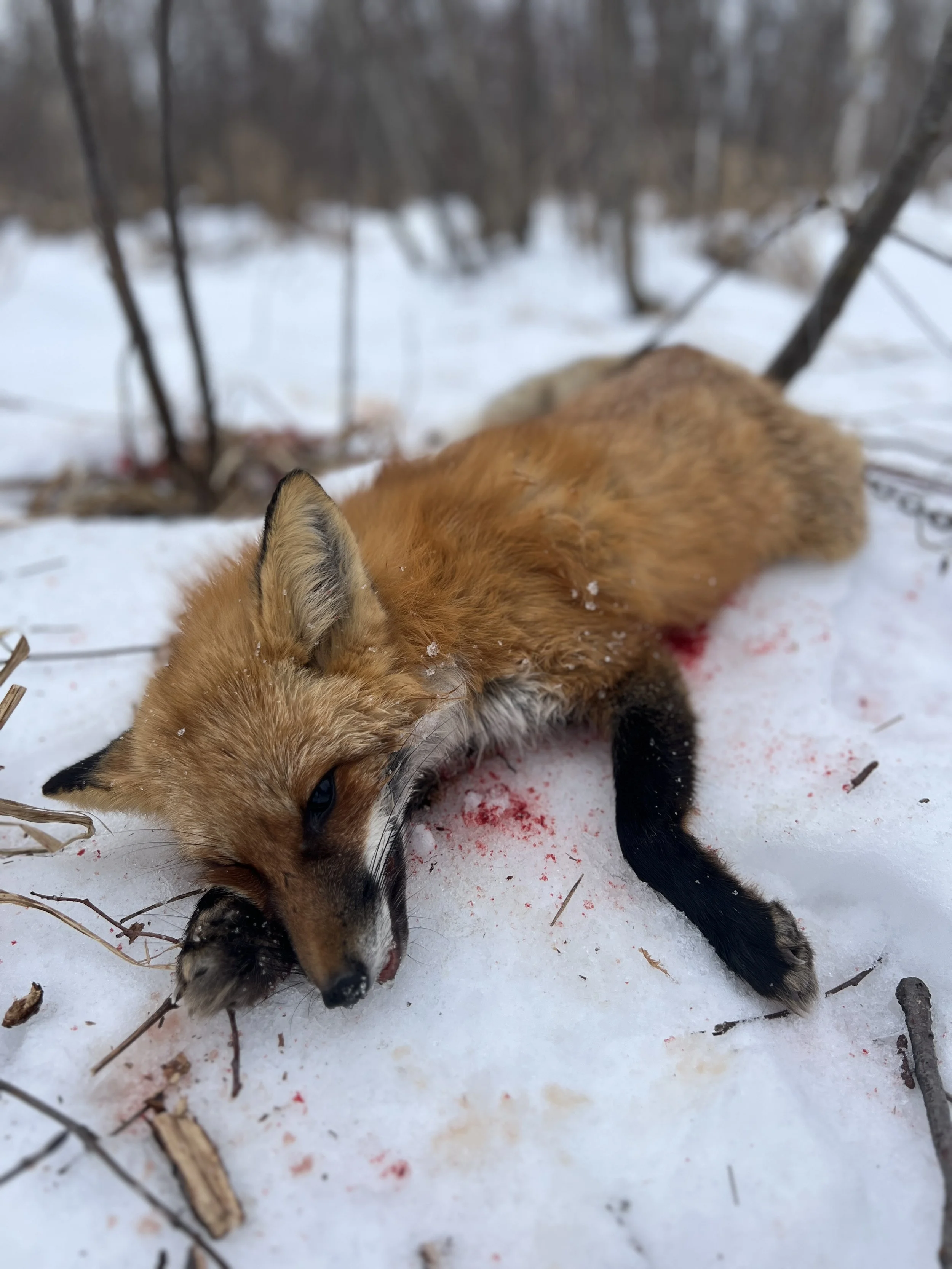
My First Catch on The Trapline
After weeks of walking the trapline and getting photos of our chicken hunter on Reveal Cell Cams, we finally got this beautiful red fox to cross paths with one of our cable restraints!
Trap Prep: Where People Overthink Themselves Out of Action
Trap prep is where most beginners get stuck before they ever start.
The internet makes it sound like if you don’t prep traps perfectly, you’re doomed to fail. In reality, trap prep matters — but it doesn’t matter more than location, bedding, and how animals are actually using your ground.
My approach ended up being simple. I removed factory oil, let the traps rust naturally over time, and focused on learning how animals move instead of chasing perfection. Once I stopped obsessing over prep and started paying attention to sign, things began to click.
Am I doing it the “right way”? Probably not, but at least I am out there learning and having fun! Besides - a perfectly waxed trap in a dead spot is still a dead set.
Frozen Ground and the Reality of Running Sets
One lesson that hits fast in northern climates is how brutal frozen ground can be. Earth anchors and footholds work, but when the ground is rock solid and you’re still learning, adjusting sets becomes a physical battle.
That’s where cable restraints started making sense for me. They’re lighter, easier to carry in volume, and far more forgiving when you’re constantly moving things as you learn. They’re not a shortcut — they’re just a practical tool for a beginner who needs flexibility.
Trapping looks passive from the outside. In reality, it’s work. Anyone who thinks trapping is lazy hasn’t tried pulling frozen anchors or resetting steel in sub-zero temps.
Drags, Anchors, and Learning Through Mistakes
When you’re new, you’re going to misread sign. You’ll set where tracks looked good for one day and then realize nothing has passed through in weeks.
That’s why adaptability matters early. Drags gave me the freedom to move sets without fighting frozen ground every time. They’re not perfect for every situation, but for learning, they removed friction and let me focus on understanding movement instead of wrestling equipment.
That theme comes up again and again in trapping: the “best” method depends on your ground, your time, and your goals.
Fur, Conservation, and Why It Still Matters
We spent a lot of time talking about fur, not from a market-price perspective, but from a connection standpoint.
Real fur is durable. It’s biodegradable. It represents an animal that was part of a functioning system rather than a disposable problem. Even if you never sell a single pelt, handling fur forces respect for the animal and the role it played on the landscape.
For me, the motivation isn’t money. It’s habitat, predator balance, and the satisfaction of using what the land provides responsibly.
Can Trapping Ever Be More Than a Hobby?
Eventually the business side creeps in. You start hearing stories about past fur booms, about people who paid for trucks or land by running traplines before school. You start wondering whether alternative markets, ADC work, or niche uses could ever add up.
Maybe they can. Maybe they can’t.
What matters more is that trapping teaches skills that compound. Problem-solving. Observation. Patience. Systems thinking. Those skills translate whether you’re managing wildlife, improving habitat, or just becoming more capable outdoors.
Why Trapping Keeps Pulling People In
The biggest takeaway from this conversation wasn’t about gear, methods, or markets. It was about why trapping sticks with people once they start.
It’s immersive. It’s humbling. It rewards effort and punishes assumptions. And unlike many outdoor pursuits, it gives you feedback every single day.
If trapping has been sitting in the back of your mind for years, the hardest part isn’t learning how. It’s deciding to start.
Don’t Miss What’s Coming Next
Be the first to hear about application deadlines, new gear worth paying attention to, and occasional giveaways. Join 4,000+ hunters who get the Drawn West Newsletter and stay one step ahead of the season!
It’s hard to know what calls are worth putting in your pack, especially on your first hunt. Here's what's in my pack, why I run a diaphragm 3-pack as the foundation, and when to reach for backup options like the Hoochie Mama or EZ Estrus.