How To Draw a Tag In The West
How to Draw a Tag in the West (Without Getting Burned)
Every year, a lot of hunters decide they’re finally going to hunt out West—and then fall rolls around and reality hits: you can’t just stop at a gas station and buy a tag. The application window closed months ago, the draws already happened, and suddenly the trip you were planning doesn’t exist.
Western application systems are confusing by design. Every state is different, deadlines are scattered across the calendar, and it’s easy to spend money on applications or points without fully understanding what you’re actually buying. Do it wrong, and you can waste years building points you’ll never use, or chase “easy” tags that are easy for a reason.
This guide breaks down how western draw systems actually work, why planning ahead matters, and how to build a simple strategy so you’re not surprised, over-invested, or locked out when hunting season shows up.
Step one: understand why the West feels so different
In most Midwest/Eastern whitetail worlds, the order of operations is simple: plan the trip, pick the weekend, then go buy a tag.
Out West, it flips. For most species and most non-residents, you’re applying 6–12 months ahead of the hunt. That means your tag decision drives everything else—vacation days, buddy commitments, gear upgrades, scouting, and how you spend your hunting budget.
And here’s the kicker: not all tags are created equal. An “easy to draw” tag can be awesome… or it can be a serious red flag. We will dive into that more later.
The 4 core western draw systems (the simple version)
If you can wrap your head around these four, the rest becomes manageable.
Over-the-counter (OTC): You buy the tag without applying (sometimes truly unlimited, sometimes “OTC but capped / first come”).
Random draw (no points): Everyone applies and it’s a lottery—no preference for past applicants.
Preference points: Tags go to the people with the most points, top-down, until they’re gone.
Bonus points: Points increase your odds (more “lottery tickets”), but you still aren’t guaranteed.
Now let’s break each one down in plain English.
OTC tags: fast, flexible… but there’s always a tradeoff
True over-the-counter tags are the closest thing the West still has to walking into a gas station and buying a tag on the way to camp. If you’re late to planning, missed application deadlines, or just want to make something happen this fall, OTC can be the difference between hunting and staying home.
But OTC tags aren’t over-the-counter because they’re easy or overlooked. They’re almost always managed for opportunity, not comfort or quality. Something about the hunt is harder—pressure is higher, access is limited, animals may be concentrated on private land, or the average age class is lower. You can still have a great hunt and kill solid animals in OTC units, but you’re trading simplicity of access for difficulty somewhere else.
A few true OTC options still exist. Colorado offers over-the-counter rifle elk tags in many general units during second and third season. North Dakota allows non-residents to purchase an OTC archery whitetail license. Utah maintains limited general elk options, including spike and select any-bull hunts. South Dakota has a small number of OTC opportunities, though many are restricted to private land.
OTC tags can absolutely work—but only if you treat them for what they are: a way to hunt this year, not a guarantee of an easy or high-quality experience. Planning with that mindset is what keeps OTC from becoming a surprise letdown.
Random draw: simple, fair, and unpredictable
Random draw systems are exactly what they sound like. You apply for a tag, your name goes into a hat, and the results are purely luck-based. There are no points, no seniority, and no advantage for having applied longer than anyone else. Every applicant starts on equal footing each year. Here are the states that have a true, random draw:
Alaska
Idaho
New Mexico
That simplicity is also why these systems appeal to a lot of hunters—especially those just getting started. You’re not locked out for years while trying to catch up in a point race. If your number comes up, you’re in. If it doesn’t, you’re not. The downside is obvious: there’s no certainty. You can do everything right, plan responsibly, and still walk away without a tag.
Random draw works best when it’s treated as part of a bigger plan, not the plan itself. If you rely on it as your only option, it can make vacation time, logistics, and expectations hard to manage. But when paired with other applications or fallback opportunities, it offers one of the fairest ways to get new hunters into western tags without spending a decade on the sidelines or a chance to mix in a bonus high-quality tag.
Preference points: predictable… and the reason “point creep” exists
Preference point systems are the most straightforward draw systems in the West. Tags are awarded strictly in order of who has the most points. If a unit has ten tags available, the ten applicants with the highest point totals draw—everyone else goes home empty-handed. Once the draw starts, there’s no randomness. Points either get you over the line or they don’t.
The predictability is exactly why people like preference systems—and it’s also how point creep starts. As demand increases and tag numbers stay flat, the number of points required to draw slowly rises over time. In high-demand units, that creep never stops.
A good example is northwest Colorado elk. Those units produce some of the best elk hunting in the country, but there are far more people sitting at max points than there are tags issued each year. If a unit gives out ten tags annually and hundreds—or even thousands—of applicants already have max or near max points, the system never works its way down to new applicants. Even if you apply every year starting now, you’re effectively waiting for everyone ahead of you to draw or drop out, which realistically may never happen in your lifetime.
That’s the reality of point creep – and it can pose a major risk waiting 20+ years for a specific tag. Is that unit the same unit you’ve been dreaming of, or has something changed and the quality is no longer there? Do you still have enough health to hunt it like you’ve been dreaming of? Are you willing to wait for half your hunting career on one tag? These are some of the reasons why I personally tend to shy away from chasing the point creep in some of these “best units in the country”.
Preference points work well if your goal is a predictable, long-term path to a specific tag. They work poorly if you’re new and hoping to hunt soon. Without a short- or mid-term plan layered in, it’s easy to spend years building points while never actually setting foot in the field.
States that primarily use true preference point systems include:
Colorado
Iowa
California
Used intentionally, preference points are a planning tool. Used blindly, they’re how people end up ten years deep with no hunts to show for it.
Bonus points: everyone has a chance… but nobody is guaranteed
Bonus point systems sit somewhere between a pure lottery and a preference system. Instead of points putting you in a fixed line, they act like extra entries in a draw. The more points you have, the better your odds—but there’s never a point where you’re guaranteed a tag.
Many states go a step further by weighting those points. Some square them, others use more complex formulas that heavily favor long-time applicants. That does reward commitment, but it also means the draw can still surprise you. You can apply for years, build a strong point total, do everything “right,” and still come up empty when the numbers fall the wrong way.
That unpredictability is the defining feature of bonus point systems. They don’t lock new hunters out the way strict preference systems can, but they also don’t promise that patience will ever pay off on a specific timeline. It’s why you occasionally hear about first-year applicants drawing incredible tags—and why people with decades invested are still waiting.
States that use a pure bonus point system:
Arizona
Nevada
North Dakota
South Dakota (Even though they call it a “Preference Point”)
Washington
Bonus point systems reward flexibility. If you can accept the uncertainty and pair them with short- and mid-term options, they can be a great long-game play. If you expect them to behave like preference points, they’re one of the easiest ways to get frustrated.
Hybrid systems: where things get confusing
Hybrid systems are where most hunters start to lose confidence—not because they’re impossible to understand, but because states combine multiple draw rules into a single process. Some tags are awarded by preference points, others by random draw, and sometimes the system changes depending on whether you’re applying for a general license or a limited-entry permit.
A good example is Wyoming, which allocates 75% of tags through a preference point system, but reserves 25% of tags for a true random draw. That means no matter how many points you have, there is always a (small) chance you can draw. Another common example is Montana, where you first have to draw a general deer or elk license using preference points, then if you want to add a limited entry permit, separately draw using bonus points—and if you don’t draw the permit, you have the option to return the general tag which goes back into a second general drawing for applicants that didn’t get picked in the first pass.
Total Chaos.
This is why the same question comes up every spring: What are my actual odds? The answer usually depends on which portion of the system you’re looking at, how many people are applying in each pool, and whether the state has added caps, quotas, or return options on top of it.
This is also where having everything in one place saves a massive amount of time. Comparing draw odds, unit access, deadlines, point rules, and season structures across multiple hybrid systems is painful if you’re bouncing between state PDFs and spreadsheets. That’s exactly why I use GoHunt Insider—draw odds, unit research, and mapping all live in one spot instead of chasing five different state websites.
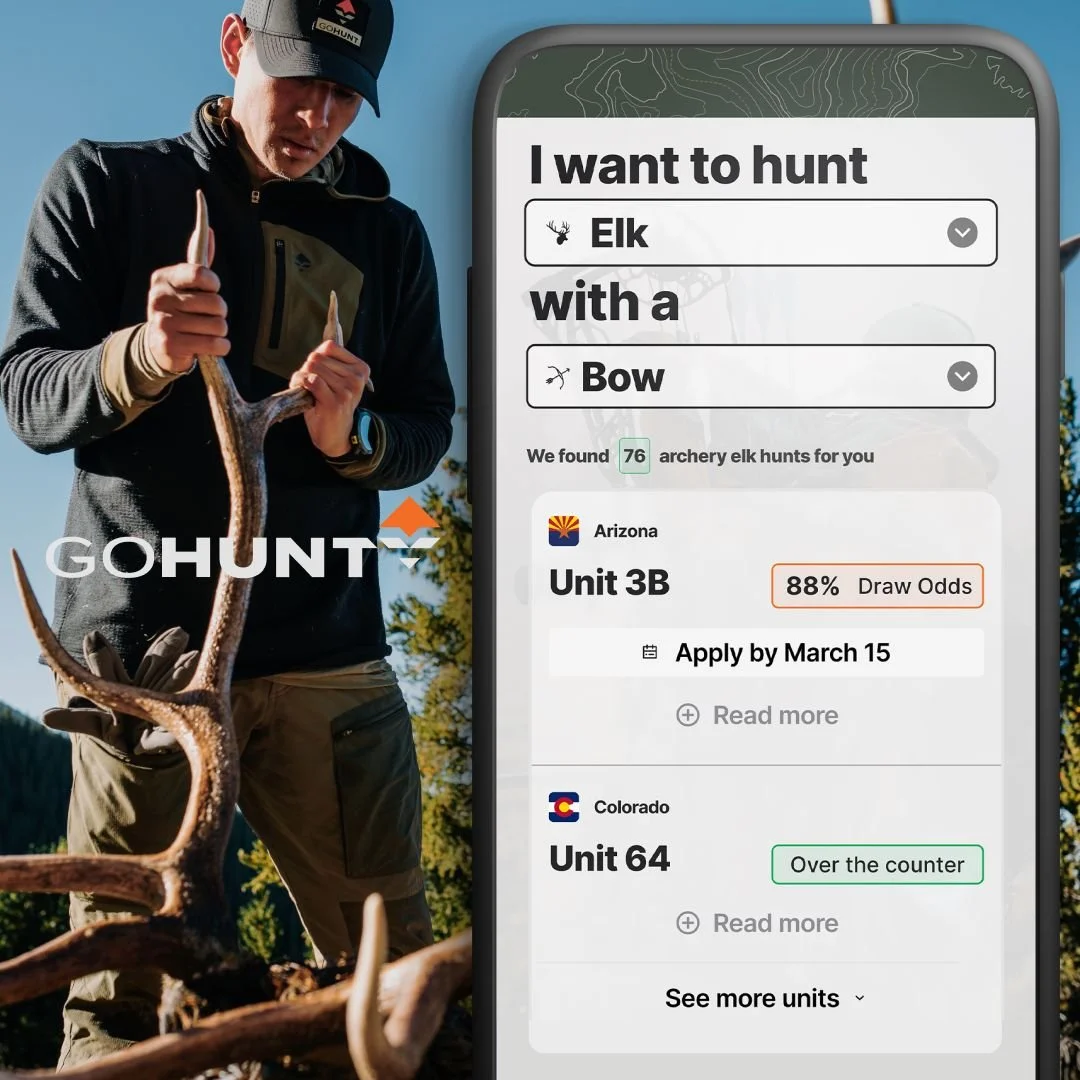
want the best draw odds for planning your applications?
Check out GOHUNT Insider for the most accurate draw odds available for your applications this season!
Use discount code DRAWNWEST when you sign up to get $50 credit at the GOHUNT Gear Shop!
If you’re already going to run a mapping app and already going to research units, rolling it into one platform is usually the cleanest and least error-prone way to deal with hybrid systems—especially when the rules change year to year.
How to build A Strategy: short-term, mid-term, long-term
Once you understand how the draw systems work, the next mistake people make is trying to force everything into a single bucket. They either chase only long-term “dream” tags and never hunt, or they bounce from opportunity to opportunity with no plan and wonder why nothing ever lines up. The fix is thinking in timelines.
This framework is what keeps you hunting regularly while still building toward better tags over time.
Short-term: Units you can hunt now
Short-term options are the tags that let you go this year or next year. These are your opportunity hunts— Colorado OTC tags, Montana General, Wyoming Deer or Antelope, random draw tags, or low-point draws. The goal here isn’t perfection, it’s getting an opportunity to hunt each year. You’re prioritizing frequency and building experience over unit prestige.
This is where rotating states, species, and even weapon types starts to matter. It’s becoming harder and harder to draw the same tag year after year. Mixing in antelope, mule deer, rifle vs archery seasons, or different states is often what keeps annual trips alive when you can’t draw your favorite tag season after season anymore.
Mid-term: Units you can hunt every few years
Hunting every year is the goal, but eventually we all want to mix in a little better unit. Mid-term tags are where point systems start doing real work for you. These are hunts you can realistically draw on a four- to seven-year rhythm depending on demand and species. You’re not waiting a decade, but you’re also not expecting to go every season.
This is often where hunters make their biggest leap in hunt quality—better access, better timing, less pressure—because you’ve given the system enough time to reward patience without stalling out your hunting life.
This might be Wyoming General Elk, or a 5 point Colorado unit, or maybe even late season Arizona elk. This is where you take everything you’ve learned from hunting those difficult, OTC or General units full of other hunts, and apply it to a pretty solid unit with less pressure and more animals.
Long-term: The Units We Dream About Hunting
Long-term tags are the ten-plus-year plays. These are the units everyone talks about, the ones that require sustained commitment and a willingness to wait. When I think of long-term tags, I think of NW Colorado Elk, Utah & Arizona Archery Elk, Nevada Antelope, the Wyoming Migration Mule Deer hunt. There’s nothing wrong with having these in your plan—as long as they stay in their lane.
The problem starts when long-term tags become the only plan. That’s how people end up a decade deep with points, money spent, and very few actual hunts behind them. Long-term tags should be the bonus, not the foundation. If you haven’t hunted elk in the 10 or 20 years it took to draw these tags, you might spend your whole hunt learning elk from square one instead of experiencing the hunt of a lifetime. It’s the consistent years of practice and learning on the mountain that come together to make these long-term, potentially once-in-a-lifetime tags, truly magical.
If you want a clean, proven starting point for most western big game species, my baseline recommendation still holds: build points in Wyoming, Montana, and Colorado for the species you care about, then start adding in a few long term options for your favorite species. It’s not the only path—but it’s one that keeps you learning, hunting, and progressing instead of waiting on the sidelines.
Application stacking: the trick to drawing more (and better) tags
Application stacking is one of the most effective ways to increase your chances of drawing a tag in a single year - without accidentally committing yourself to two hunts you can’t realistically pull off. It’s not about applying everywhere and hoping for the best. It’s about understanding timing.
The core idea is sequencing. You apply in states where draw results are released early, then use that information to decide whether to stay in—or withdraw from—later applications. If you build the order correctly, you can take multiple swings in one season while keeping your risk under control.
Elk is where stacking really shines. For example, you can start with early-result applications like Idaho in December, then if you don’t draw when the results come out Mid-January, move into Wyoming and Arizona, where draw results or withdrawal deadlines give you flexibility. If you draw Arizona, you pull out of Wyoming for free,. If you don’t, you keep stacking chances. Montana can also fit into this sequence the deadline to apply for elk is after Arizona’s results, and Montana releases their results before the deadline to withdraw in Wyoming. Finally, if none of those hit, you can still apply for Idaho in June, potentially stacking five chances to draw an elk tag in one year.
The same concept can work for deer, though the windows are tighter and you have to be more careful with overlapping deadlines—especially in states like Colorado, where results may come out too late to undo earlier decisions. This is where people get burned if they don’t read the fine print.
The key is knowing three things for every application: the deadline, when results are released, and whether the state allows withdrawals or refunds after the draw. Miss one of those details and stacking turns from a strategy into a gamble.
If there’s one takeaway here, it’s this: don’t stack blindly. When done intentionally, application stacking can dramatically increase how often you draw tags. When done carelessly, it’s how people end up overcommitted, overcharged, and potentially sitting on two elk tags come fall with only enough vacation time for one!
First world problems, right?
Three common mistakes that can wreck people’s first few seasons
Assuming “easy to draw” means “great hunt.”
Sometimes an easy tag is a great hunt—but more often, it’s easy because something else is hard. Access might be limited. The unit might have plenty of animals, but might only have a few that are actually huntable – the rest might be on private land, land-locked public, or simply too difficult to get to.. Or the terrain, pressure, or season timing makes success tougher than it looks on paper. Leftover and low-demand tags almost always come with a tradeoff. That doesn’t make them bad hunts—but it does mean you need to understand why they’re easy before committing.
Going out West with trophy expectations in year one.
A lot of first western trips fall apart mentally, not logistically. If you go in expecting a specific score or class of animal, you’re setting yourself up for frustration. Treat the first trip like a western camping trip where you also get to hunt. Learn the country, learn how animals use the terrain, and get comfortable navigating big landscapes. If you do that, it’s hard to have a bad first season—even if you don’t punch a tag.
Buying points without a plan.
Points are easy to accumulate and even easier to forget about. Before long, you’re paying for licenses and points in states you don’t actually plan to hunt, for species you’re not excited about, just because you started once and never stopped. Points only make sense if they fit into a larger strategy—short-, mid-, or long-term. If you can’t explain why you’re buying a point and when you realistically want to use it, that money is probably better spent on the hunt itself.
Most early frustrations in western hunting don’t come from bad luck—they come from mismatched expectations. Avoid these three mistakes, and the learning curve gets a lot smoother.
Practical next steps for your first application season
If you’re looking to plan your first hunt this season, here’s where to start:
Decide what you’d genuinely be excited to hunt this fall (species + weapon + dates).
Make sure your group is actually committed (and understands how application payments work).
Build your list of states and deadlines.
Apply, then build points in the states that fit your longer plan.
Subscribe to the Drawn West podcast so you don’t miss any of the deadlines
All joking aside, one of the best ways to stay up-to-date on western application deadlines is the Drawn West podcast. We put out bonus episodes before each deadline with all the details you need to know to apply. Subscribe on your favorite platform to stay up-to-date!
Apple | Spotify | YouTube
Wrapping Things Up
Western tags can feel complicated because… they are. But once you understand the four draw systems and you build a short/mid/long plan, the chaos turns into a process you can repeat every year.
don’t Miss What’s Coming Next
Be the first to hear about application deadlines, new gear worth paying attention to, and occasional giveaways. Join 4,000+ hunters who get the Drawn West Newsletter and stay one step ahead of the season!
It’s hard to know what calls are worth putting in your pack, especially on your first hunt. Here's what's in my pack, why I run a diaphragm 3-pack as the foundation, and when to reach for backup options like the Hoochie Mama or EZ Estrus.