2026 Colorado Elk Application Strategy
Colorado elk is one of the last places where you can still put together a plan and just go hunting.
Not perfectly, and not without some tradeoffs—but compared to most western states, there’s still a lot of opportunity here. You’re not just throwing your name in a hat and hoping things work out. If you understand how Colorado works, you can line up hunts year after year.
If you’re trying to decide whether to apply this season, or how Colorado fits into your overall plan, this is how I’d look at it.
If you’d rather listen to the 2026 Mule Deer Application Strategy, check out the podcast where we break all this down for you!
The deadline (don’t skip this)
The application deadline is April 7th at 8:00 p.m. Mountain Time.
And if you want to build a point, you still have to apply by that date. There’s no coming back later in the summer and grabbing one like you can in some other states.
Every year people sit out Colorado thinking they’ll just build a point later. Then they realize they missed it entirely. If Colorado is part of your plan—even just for the future—you need to be in before that deadline.
What’s changed—and what’s likely coming next
The biggest shift has been with archery elk.
Colorado moved away from true over-the-counter archery tags and pushed things toward unit-specific hunts with caps. The goal is pretty obvious—spread people out and keep pressure from stacking up in the same places.
There are still a few limited over-the-counter options in certain units, but it’s not what it used to be. And if you’re looking ahead a few years, I wouldn’t expect things to loosen back up.
Rifle seasons are still mostly intact right now, especially second and third season options. But if Colorado keeps heading in the same direction, I’d expect those to tighten over time as well.
How Much a Colorado Elk Tag Costs
An elk tag is $845, and you also need to buy a $105 hunting license.
So you’re right around $950 just to apply and hunt.
That’s pretty standard across the West now. It’s not cheap, but it’s also not out of line with what other states are doing.
Why Colorado is still useful for planning hunts
Colorado uses a true preference point system.
That’s one of the biggest reasons it’s still so valuable.
There’s no randomness to it. The people with the most points get the tags first, and it works its way down from there. You can look at your point total, compare it to the data, and get a realistic sense of what you can draw.
That makes it a lot easier to plan compared to states where you might apply for years and never have a clear idea of when things will line up.
The upcoming change in 2028
Starting in 2028, Colorado is planning to split the draw.
Half the tags would still go to the highest point holders, and the other half would move into some kind of weighted draw.
The details aren’t fully finalized, but the direction is clear enough.
If you’ve been building points for a long time, this is something to pay attention to. Right now, your points basically define your position in line. Once part of the system becomes more random, that predictability starts to fade.
If you’re sitting on a large number of points, it’s worth thinking about when you actually plan to use them. This change could be either add or subtract years to your wait. If you’re newer to the system, it probably doesn’t change much in the short term.
What Colorado elk hunting actually looks like
Colorado has more elk than any other state. The population is well over 300,000 animals and has been trending upward.
That’s the upside.
The tradeoff is how the state is managed.
Colorado leans heavily toward opportunity. There are big bulls in the state—no question—but most units aren’t built around producing top-end animals year after year.
What you’ll find instead is a lot of elk, a lot of hunters, and a lot of pressure. Most people (myself included) are typically going to take the first legal elk they get a shot at, and that naturally keeps the age class lower than something like a Utah Limited Entry unit.
That doesn’t mean you won’t see big bulls. It just means you have to work for them, and they’re not evenly spread across the map.
How to think about choosing a unit
A lot of people start by looking at trophy potential.
I’d go the other direction.
I like to start with harvest success rates. This tells me how huntable the elk are in the unit. From there, I try to match the unit to the style of hunting I prefer – this is where your own strengths (or weaknesses) can come into play.
Once you’ve got a list of solid units, then start thinking about bull size. The best place is to start your search is GOHUNT’s Filtering 2.0 tool which gives you all the information on every unit across the west.
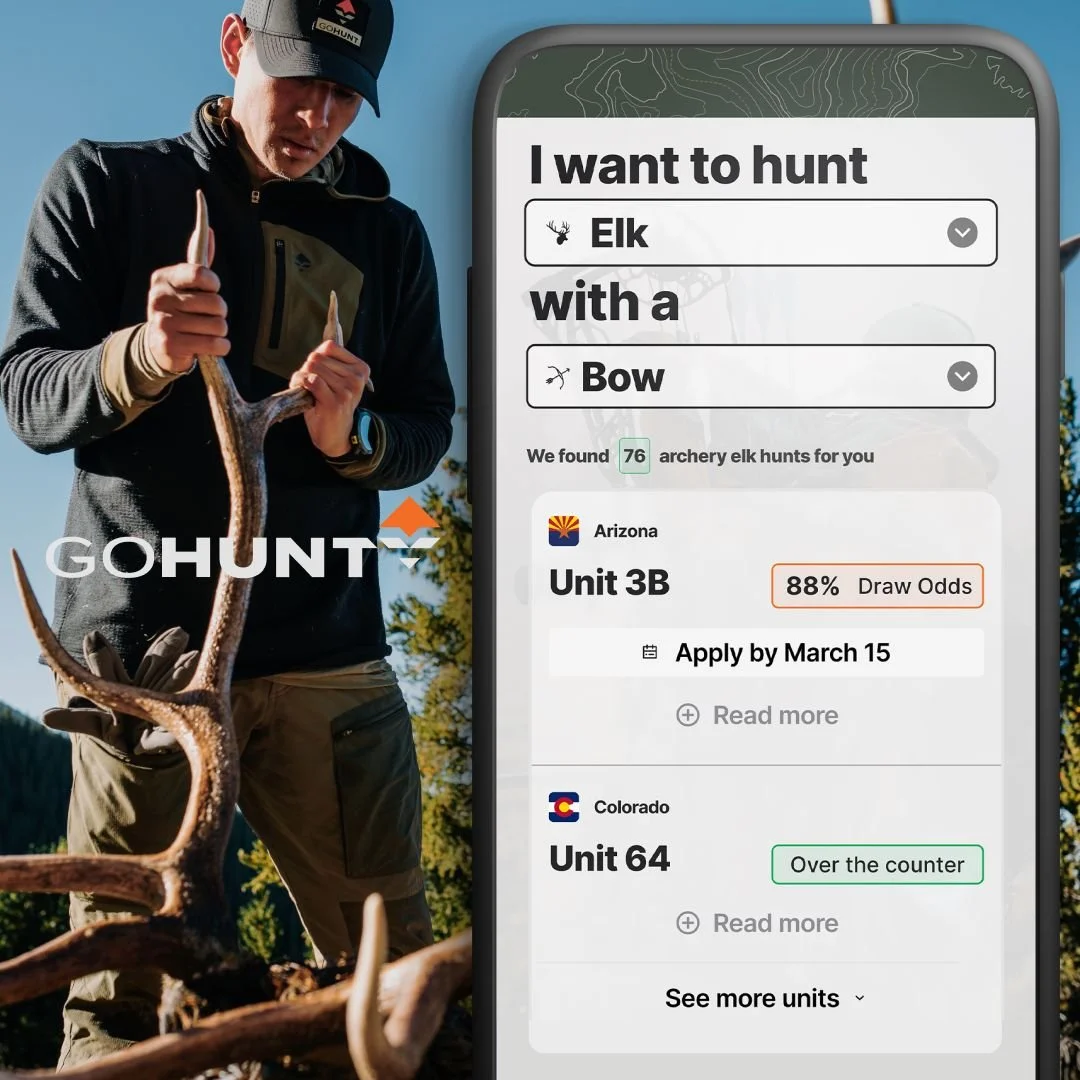
Looking for the perfect Elk Unit?
GOHUNT’s Filtering 2.0 gives you all the data you need for EVERY UNIT across the west. Use it on both mobile and desktop to find your next hunt!
Use the code DRAWNWEST to get $50 of gear shop credit when you sign up for INSIDER to get all GOHUNT’s tools - Including Filtering 2.0!
Colorado Elk Units by Point Level
Units with 0 Elk Points
At zero points, you can still go elk hunting. That’s what makes Colorado different.
There are archery, muzzleloader, and rifle options where you can get a tag and go.
If you’re looking for better success rates, units 26, 9, and 13 look pretty good. Those chasing giants might want to check out units 3 and 83.
The best part about 0 point units is the chance to find a cornerstone unit and hunt it every year – build your skills, build your knowledge of the unit, and eventually build a pile of antlers on the wall.
Units with 3 Elk Points
Once you get into that three-point range, things open up a little more. You’re not necessarily jumping into completely different units, but you start gaining flexibility in seasons and draw odds. You can be a bit more selective about how and when you hunt. More options for things like 1st and 4th rifle in the units above.
Where things get tricky is that mid-range.
Units with 7 elk Points
Somewhere around six to eight points the options start to slow down. By now you’ve unlocked most of the decent units to some degree, whether its archery and muzzleloader seasons, or later rifle seasons. Units 20 and 49 start to look better. From here on out things can look pretty bleak for a while.
Units with 10-15 Elk Points
This is no-mans land in Colorado. In the 10-15 range, not many new units open up, and the extra years waiting really only get you a few remaining season options in the units you’ve already been looking at. You’re still going to be a decade or two away from the top-tier units like 1, 2, 10, and 201. At this point, I’d probably recommend spending them and go hunting unless your dead-set on waiting for the best.
Units with 25+ Elk Points
To really break into the top end, you’re looking at a long wait—closer to that 25 to 30+ point range. Hopefully the updated draw system in 2028 helps you draw top-tier units a little faster, but at this point you’re in it for the long haul, might as well stay the course.
Your focus should be on the northwest corner of Colorado.
Units like 1, 2, 10, and 201 are consistently at the top of the list. This is where you are going to have a true once-in-a-lifetime experience and the chance to hunt 370”+ bulls - maybe even 400”.
But getting into those units is a long game.
For some people, that’s the plan. For most, it’s probably not the best way to approach Colorado.
The decision most people need to make
At some point, you have to decide what you want out of Colorado.
You can hunt elk here regularly, build experience, and learn how to be successful over time.
Or you can sit on points and aim for one of the best tags in the state.
Both approaches work. They just lead to very different outcomes.
For most hunters—especially if you don’t have another state where you’re hunting elk every year—it’s hard to justify waiting decades just to chase a slightly better hunt.
There’s a lot to be said for going now, figuring things out, and getting better each time you come back. There are giant bulls killed every year on OTC and zero point units…
Final thoughts On Colorado Elk
Colorado isn’t perfect, but it’s still one of the most reliable ways to actually get into elk country.
You can look at your situation, pick a direction, and go.
And for a lot of people, that’s exactly what they need.
Here’s What I Would Do Next:
If you’re trying to pull off a DIY elk hunt without overspending:
→ How To Go Elk Hunting for $1500
If you’re still building out your overall plan for the West:
→ Master Your Big Game Application Strategy
And if you want to stay up-to-date on all things Drawn West, make sure you’re signed up for the Drawn West Newsletter and following the podcast on your favorite platform!







Nevada elk draw odds are brutal. But if you’re already applying for mule deer or antelope, adding elk is a $19 lottery ticket for one of the best elk hunts in North America. Here’s how to think about it.