2026 Colorado Moose, Sheep, And Goat Strategy
Every year around application season, there’s a point where guys start looking at moose, sheep, and goat tags and thinking, “Man… maybe this is the year.”
And then you look at the odds, look at the price, and it feels like something you’ll never actually do.
Here’s the thing though—Colorado plays this game a little differently. Not easier, not cheaper, but different in a way that might give you a reason to stay in it.
If you’re even considering putting your name in the hat, this is where it’s worth slowing down and understanding how it Colorado MSG Drawings work.
First Things First: The Colorado Application Deadline
Before you get into strategy, units, or anything else, you’ve got one job:
April 7 at 8:00 PM MT
Miss that, and you’re not building points, you’re not applying, you’re just sitting out the year. There’s no “I’ll grab a point later” like Wyoming or Montana.
That alone is why having some kind of system matters. Even if it’s just a basic calendar reminder, you need something keeping you on track here.
The Price Sounds Crazy… Until You Compare It
Let’s just say it straight—$2,823 for a tag isn’t nothing.
Add the qualifying license, and you’re over $2,900 before you’ve even packed a bag.
That’s usually where people tap out.
But if you zoom out a little, it starts to look different.
If you want to hunt sheep or goats somewhere like Alaska or Canada, you’re not even having the same conversation. You’re talking outfitter-only hunts, and you’re easily talking 10-20x this cost. Even Moose hunters will struggle to find ANY options for moose hunting - whether DIY or Guided - for less than this price if you factor in travel & lodging.
So yeah, Colorado is expensive. But in the world of moose, sheep, and goat hunting, it’s actually one of the cheaper options.
Why Colorado Is Even Worth Considering
Most western states fall into one of two extremes.
Either it’s a pure preference system where you’re waiting your turn behind people who have been applying since the early 2000s… or it’s completely random and feels like buying scratch-off tickets every year.
Colorado sits somewhere in the middle.
You still have to commit to it—you need three preference points just to get in the game—but after that, it turns into a weighted lottery where your odds improve each year.
That last part is the reason people stay in it.
Starting in year three, you always have a chance.
The Draw System (Without Making It More Complicated Than It Needs to Be)
Colorado’s system gets explained in a way that makes it sound like a math class you didn’t sign up for.
In reality, you don’t need to understand every step.
Here’s the simple version:
You get assigned a random number. That number gets divided by on how many weighted points you have. The more points you’ve built, the better your position ends up being.
That’s it.
It’s still random, but the more points you have, the better your odds get.
And that’s why this works as a long-term play.
The Part Most People Get Wrong
Most people hear about moose, sheep, and goat tags and immediately think one of two things, “I’ll just apply for all of them.” or “It’s not worth applying for any of them”
I don’t love that approach.
You’re looking at $100 per species, per year. If you do all three, that’s $300 every single year. Do that for a couple decades and you’ve got real money tied up in points.
So instead, flip the question.
Which one of these would you actually go hunt if you drew it?
Not “that would be cool someday.” I mean you’d take the time off, spend the money, and commit to the trip.
Start there. Maybe it’s one species. Maybe it’s two. But there’s no reason to pay into all three unless you know you’re in it for the long haul. It’s also much better than skipping all of them because you don’t want to fork over $300 each year. Pick the middle road.
Colorado’s Rocky Mountain Bighorn Sheep Breakdown
Colorado’s bighorn population is in a pretty steady place right now. Numbers are holding, tags are slowly increasing, and from a management standpoint, things are stable.
But the tradeoff is pretty clear.
Colorado isn’t managing for giant rams.
You’ll see good sheep. You’ll see respectable sheep. But this isn’t the place people point to when they’re chasing record-book animals. Think 150-165” Rams compared to top tier places like Canada where you’ll see more 180”+ rams.
What it is, though, is a place where you can realistically stay in the draw and have a chance over time. Once you start building points, you’re not staring at a lifetime of zero odds—you’re slowly working your way into the conversation.
With 10 points, you’ve got options for units with 1% odds and by 20 points you’ve got a few options closer to 3%. These don’t sound very high but this is still Bighorn Sheep we are talking about – the alternative is writing a check to an outfitter for $50k+ in Canada or drawing an even harder tag in another state.
Colorado’s Rocky Mountain Goat Breakdown
Goats are a little bit of a different story.
The population hasn’t been trending the same way as sheep, and Colorado has been more conservative with tags because of it. There just aren’t as many opportunities on paper.
But fewer people are chasing goats compared to sheep.
So while there are fewer tags, there’s also less pressure, and the odds tend to balance out a bit. If goats are something you’ve always been interested in, this is still a legitimate lane—it just requires patience.
You’ll hit 1% draw odds as soon 5 points for Rocky Mountain Goats, and with 15 pts you are looking at some options in the 3-5% range.
Colorado’s Moose Breakdown
If there’s one species in Colorado that actually makes you stop and think, “Okay… this might happen someday,” it’s moose.
The population has exploded over the last couple decades. What started as a small introduction has turned into a strong, growing herd with animals spread across a lot of units.
And because of that, everything else starts to shift.
There are more tags. There’s more opportunity. And the draw odds, while still low, start to look a lot more realistic compared to sheep or goats.
With 10 points, you’ve got multiple units with over 2% odds. At 20 points, you’ve got options over 5%. Start staking 20 years of applications from 1-5% odds and there is a great chance you’ll pull a bull moose tag in Colorado.
On top of that, if the populations continue to trend upward, we might see more tags allocated and even better draw odds as time goes on.
In addition to decent draw odds, success rates are high. When people draw moose tags in Colorado, they’re usually filling them. A majority of units are over 50% success rates, many are at 100%. For those that draw the tag, you better plan on packing some meat.
So if you’re trying to pick one species to commit to, this is the one that makes the most sense for most people.
The Shortcut Most People Ignore
There’s another angle here that doesn’t get talked about enough.
Antlerless & Female tags.
For a lot of people, the idea gets dismissed immediately. No antlers, no horns, no interest.
But if your goal is actually doing the hunt—getting into that country, learning how it works, packing out an animal, and having that experience—this is where things open up fast.
There are units where cow moose tags are drawn regularly with far fewer points. In some cases, you’re not talking about decades—you’re talking 100% draw odds in just 5 years.
On the Bighorn side, hunters can see 33% odds at drawing a ewe tag in just 3 years.
Nanny Goat tags are still very restricted due to population numbers, but still offer slightly better odds than their billy counterparts.
It’s not for everyone, but if your goal is the experience, this is one of the most realistic ways to get there sooner.
Where Tools Actually Make a Difference
This is one of those situations where guessing will waste you a lot of time and probably money.
You need to know which units even have nonresident tags, what your odds look like at your current point level, and how long you’re realistically looking at.
That’s where something like GoHunt’s Filtering 2.0 tool comes into play.
Filtering 2.0 brings all the data you need to find the perfect unit into one place. You can filter on season, how many points you have, trophy potential, and more to find the perfect hunt and plan all your applications.
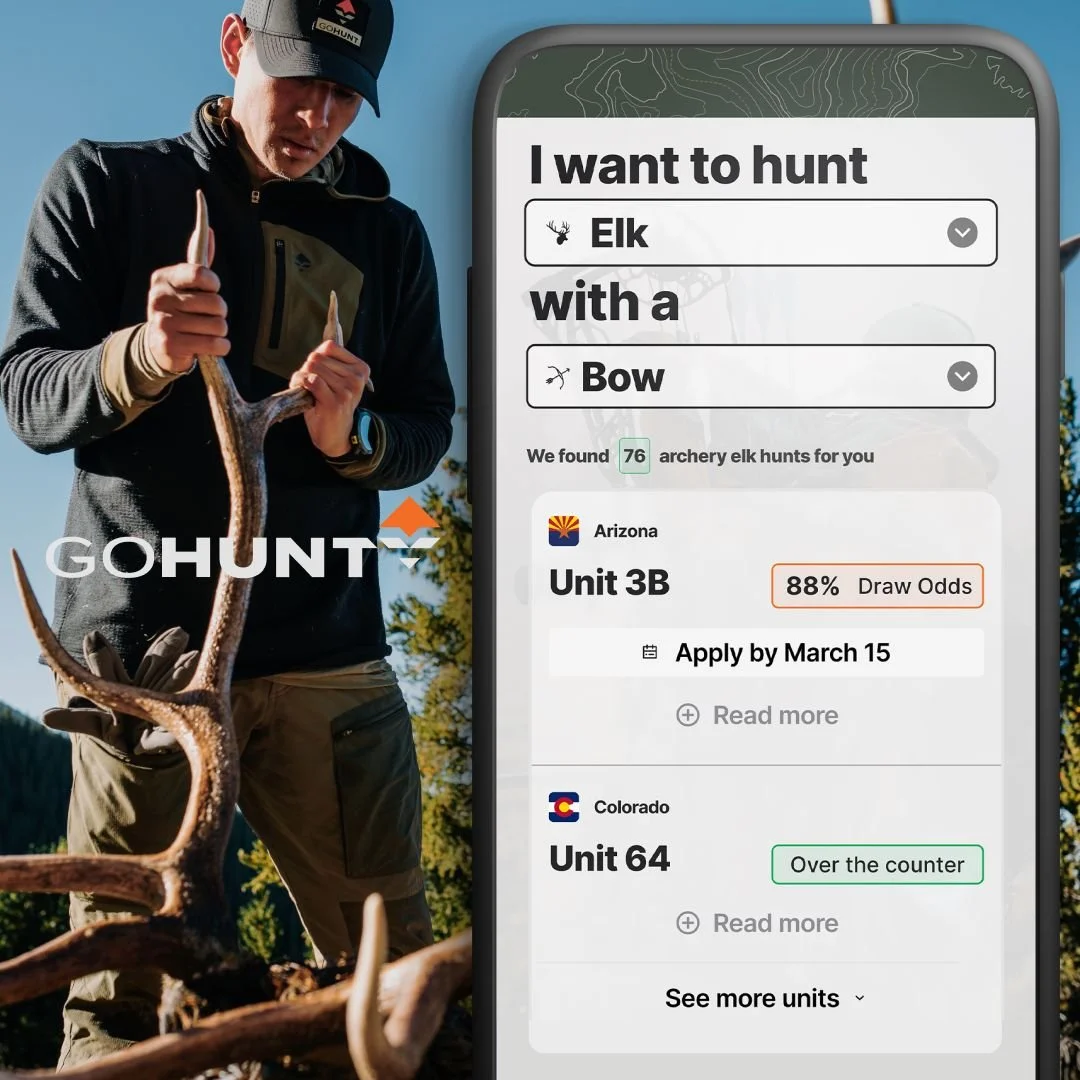
Looking for the perfect Unit?
GOHUNT’s Filtering 2.0 gives you all the data you need for EVERY UNIT across the west. Use it on both mobile and desktop to find your next hunt!
Use the code DRAWNWEST to get $50 of gear shop credit when you sign up for INSIDER to get all GOHUNT’s tools - Including Filtering 2.0
How This Fits Into Your Overall Strategy
This part is more important than anything else.
Moose, sheep, and goats should not be your main plan.
They’re the long game. The bonus. The thing you build toward while you’re still hunting elk, deer, and antelope on a regular basis.
If you build your entire strategy around these tags, you’re going to spend a lot of seasons sitting at home.
If you layer them on top of a plan that already gets you in the field every year, now it actually works.
If you’re still working through that bigger picture, this is a good place to start next
[Master Your Big Game Application Strategy]
So… Is It Worth It?
If you’re expecting quick results, no.
But if you’re willing to play the long game, keep it simple, and stay consistent year after year…
Yeah. It’s worth it.
Because unlike a lot of places, this is one where you actually have a shot.
Personally, I apply for Colorado Moose and view it as a $100 lottery ticket for the hunt of a lifetime.
Next Step
If you’re going to do this, don’t overcomplicate it.
Pick your species. Set your reminders. Stay consistent.
And if you want help keeping all of this straight during application season, join the Drawn West Newsletter:
That’s where everything stays organized, timely, and actually usable when deadlines start stacking up.











Nevada elk draw odds are brutal. But if you’re already applying for mule deer or antelope, adding elk is a $19 lottery ticket for one of the best elk hunts in North America. Here’s how to think about it.