2026 Montana Mule Deer Application Strategy
If you’re looking at Montana mule deer for 2026, here’s the thing: this is still a very relevant state, but it is not a state you should apply for blindly.
A lot of hunters still think of Montana as one of those core mule deer states, and in a broad sense, that’s true. There are a lot of deer, a lot of country, and a lot of general opportunity. But there’s also a pretty big gap between what Montana looks like on paper and what the hunt can feel like once you get there.
If you’re a nonresident trying to decide whether to throw your hat in the ring this year, this is the kind of state where realistic expectations matter more than almost anything else. Montana can absolutely give you a fun mule deer hunt. It can also chew up a pile of money and leave you wondering why you didn’t just go a different direction.
Who this Montana mule deer guide is really for
This guide is for the hunter who wants an honest look at Montana mule deer in 2026.
Not the sugar-coated version. Not the “every state is awesome” version. Just a practical look at what you’re paying for, how the draw works at a high level, what kind of hunt this usually is, and where Montana actually fits in a western mule deer strategy.
If your main goal is simply to hunt mule deer more often, Montana can still fit. If your goal is to consistently hunt high-end trophy bucks on public land, you need to go into this with your eyes open.
Podcast context
This article was built from the Drawn West Montana mule deer bonus episode and rewritten for web so it’s easier to skim while you’re researching your application plan.
Montana mule deer deadline and cost for 2026
The deadline to apply is April 1 at 11:45 p.m. Mountain Time.
For nonresidents, the deer combination license is $760. That price alone is enough to make this a serious decision. Montana is not one of those states where you casually throw in just because it’s there.
That matters even more when you remember what this hunt usually is. Montana is much more of an opportunity mule deer state than a true top-end trophy destination. There are big bucks there every year, of course. But as a statewide experience, this is generally not the place most nonresidents should expect to find easy access to mature 170-plus public land bucks.
What Montana mule deer looks like right now
Montana has a long mule deer history, but the last several years have been rough in a lot of places.
Historically, the eastern half of the state carried stronger deer numbers and a lot of opportunity. More recently, drought, disease, harsh conditions, high hunting pressure and long-term population decline have changed the feel of the hunt in a lot of those areas. Western Montana tends to have lower deer densities and more rugged country, but in some places it has felt a little more stable.
That’s part of what makes Montana tricky. You can’t just rely on old reputation. A lot of the stories people still tell about Montana mule deer are based on a version of the state that doesn’t really exist the same way anymore.
There are still plenty of deer in Montana. There are still good hunts. But the days of assuming Montana equals easy, high-quality mule deer hunting are gone.
Montana is still a core state, but mostly as an opportunity play
I still view Montana as one of the core mule deer states people should at least consider. But I consider it a core state for a very specific reason: opportunity.
If you are building points in Colorado or Wyoming and you want another place to potentially hunt along the way, Montana can make sense. If you want a general tag that gives you flexibility and lets you hunt a lot of different country, Montana can make sense. If you want a high-end public land trophy hunt without a lot of pressure, Montana is usually not the answer.
That’s a big difference.
A lot of hunters talk themselves into Montana because they see “170-inch potential” and stop there. That is usually not enough homework in this state.
General tag vs limited entry is the biggest fork in the road
At a high level, Montana gives you two very different lanes.
The first lane is the general deer combo, which is the route most nonresidents are going to be thinking about. This is the opportunity lane. It gives you flexibility, broader access across general units, and a much more realistic path to hunting this year.
The second lane is limited entry, where the better units and better average quality live. The problem is those permits are extremely hard to draw for nonresidents, especially in the truly elite units.
That creates a pretty important decision. Are you applying because you want to hunt Montana mule deer this year? Or are you applying because you want to chase one of the handful of premium units someday?
Those are two very different strategies.
What the general deer combo is good at
The beauty of the Montana general deer tag is flexibility.
Once you draw it, you are not boxed into one exact hunt area the way you are in some states. You can do your application in spring, then spend the summer researching where you actually want to hunt. That gives you room to adapt based on access, pressure, weather, public land layout, and the kind of hunt you want.
That part of Montana is genuinely attractive.
For a hunter who wants flexibility and to hunt more often, this might make Montana general a clear winner.
What limited entry is good at
The best limited entry units in Montana are absolutely better.
That is where you start seeing stronger age class, better average quality, and the kind of hunt that feels more like what people imagine when they think about premium mule deer country. The issue is simple: the best of those tags are brutally hard to draw.
For most nonresidents, the truly top-shelf limited entry units are not something you should count on in any practical sense. You can apply. You can swing for the fence. But you should not build your entire western mule deer plan around the idea that Montana is eventually going to hand you one of those units in a reasonable time frame. While there is always a chance of drawing, typically the best units like 261 and 262 are going to take 10+ bonus points to have decent odds.
Why Southeast Montana gets so many people in trouble
A lot of hunters researching Montana mule deer eventually land on the southeastern part of the state.
On paper, it makes sense. There are a lot of deer harvested in the 700s. Some units show strong trophy potential. Public land exists. It looks promising.
But this is where a lot of people get burned.
The habitat in parts of Southeast Montana can absolutely grow good bucks. The problem is that public land pressure can be intense, and a lot of the “potential” people see in the research is not the same as what the average public land hunter is realistically going to experience. On GOHUNT’s Filtering 2.0 tool, you’ll see most of the 700 units listed as 170”+ trophy potential - which is true - but most of those old bucks get that big for a reason: Private Land.
In my experience, the average age class of bucks you’ll see on public land are 1 ½ and 2 ½ year olds, and finding a 3 ½+ takes some work and boot leather. They exist on public, but finding a true 140-150” buck will be challenging.
There’s a big difference between a district having big deer in it and a nonresident rolling in for a general hunt and consistently finding those deer on accessible public.
That’s why I would be careful deciding “700s are the best option.”
Pressure is a real part of the Montana general experience
If you hunt the more obvious Montana mule deer country, especially during the rut, pressure is going to be part of the equation.
Not maybe. Part of the equation.
And pressure changes everything. It changes where deer are. It changes how you hunt. It changes how much country you need to cover. It changes whether you feel like you’re actually hunting deer or just reacting to other hunters.
That’s one of my biggest caveats with Montana general mule deer. Even if the deer numbers are there, the hunt itself may not feel like the kind of mule deer hunt you were hoping for. The last time I hunted Montana Mule Deer (in the 700s) I was absolutely shocked by the number of other hunters. It was a daily routine of driving by dozens of trucks parked at trailheads and on public land before finding a place to hunt.
Make sure you are going into Montana expecting pressure, and make sure you have the patience to put up with other hunters and you will still have a great experience.
If you still want to hunt Montana, here’s how I’d think about the state:
Instead of asking, “Where are the biggest bucks?” I think the better question is, “What kind of hunt am I actually trying to have?”
That lens makes Montana a lot easier to sort through.
If you want more deer sightings, easier terrain, and a hunt that may work better for newer hunters or kids, some of the more open-country eastern options may still make sense.
If you want less pressure and are willing to work a lot harder for fewer deer but maybe a more satisfying hunt style, start looking harder at the western and more rugged parts of the state.
If you want a middle ground, the central parts of the state start to get more interesting. Here you’ll find a mix of rugged terrain, open glassing, decent pressure but also decent deer numbers.
The regions I’d think about first:
I would not start with the far eastern units just because they are the first flashy thing that shows up in your filtering.
Personally, I’d start researching the west side of the state and work east until you find a fit.
Regions 1 and 2 can appeal to the hunter who wants to work harder, deal with tougher terrain, and get away from some of the crowding. There is some good opportunity to find mature bucks if you’re willing to work for them. Regions in the 300 and 400 series can offer more of that middle-ground feel where you still have deer around but maybe not quite the same hunting pressure you can run into farther east.
That doesn’t mean the eastern units are bad - It just means they should be a conscious choice, not the default choice.
Is Montana mule deer worth $760 for nonresidents?
That’s really the question.
If I’m being totally honest, I think Montana is expensive for what the average nonresident mule deer hunt usually offers right now. That does not mean nobody should apply. It just means the value equation is not strong.
I believe other states offer better value than Montana does currently. My pick would be Colorado if you have 0-2 points or Wyoming if you are in the 3-5 point range.
If you’re already building points in Colorado or Wyoming for a better long-term mule deer play, Montana may be a great backup or bridge state.
But if you need a hunt option now, if Montana’s drive time works better for you, or if the flexibility of the general tag fits your season really well, then yes, it can still make sense.
It’s just worth thinking about before applying.
My honest take on who should apply
Montana mule deer makes the most sense for hunters who want one of three things: flexibility, another opportunity state in the rotation, or a hunt they can realistically draw without sitting on the sidelines.
It makes less sense for hunters who are mainly chasing top-end public land trophy quality and expect Montana to deliver that consistently at a general tag level.
Here’s a simple way I’d frame it:
Apply if you want a realistic chance to hunt mule deer this year, value tag flexibility, and are okay with an opportunity-style hunt.
Pause and compare other states if your main goal is trophy quality, low pressure, or the best value per dollar.
Look harder at limited entry only if you understand the odds and are willing to play a long game without pretending those permits are easy to reach.
How TO SPEED UP the RESEARCH process
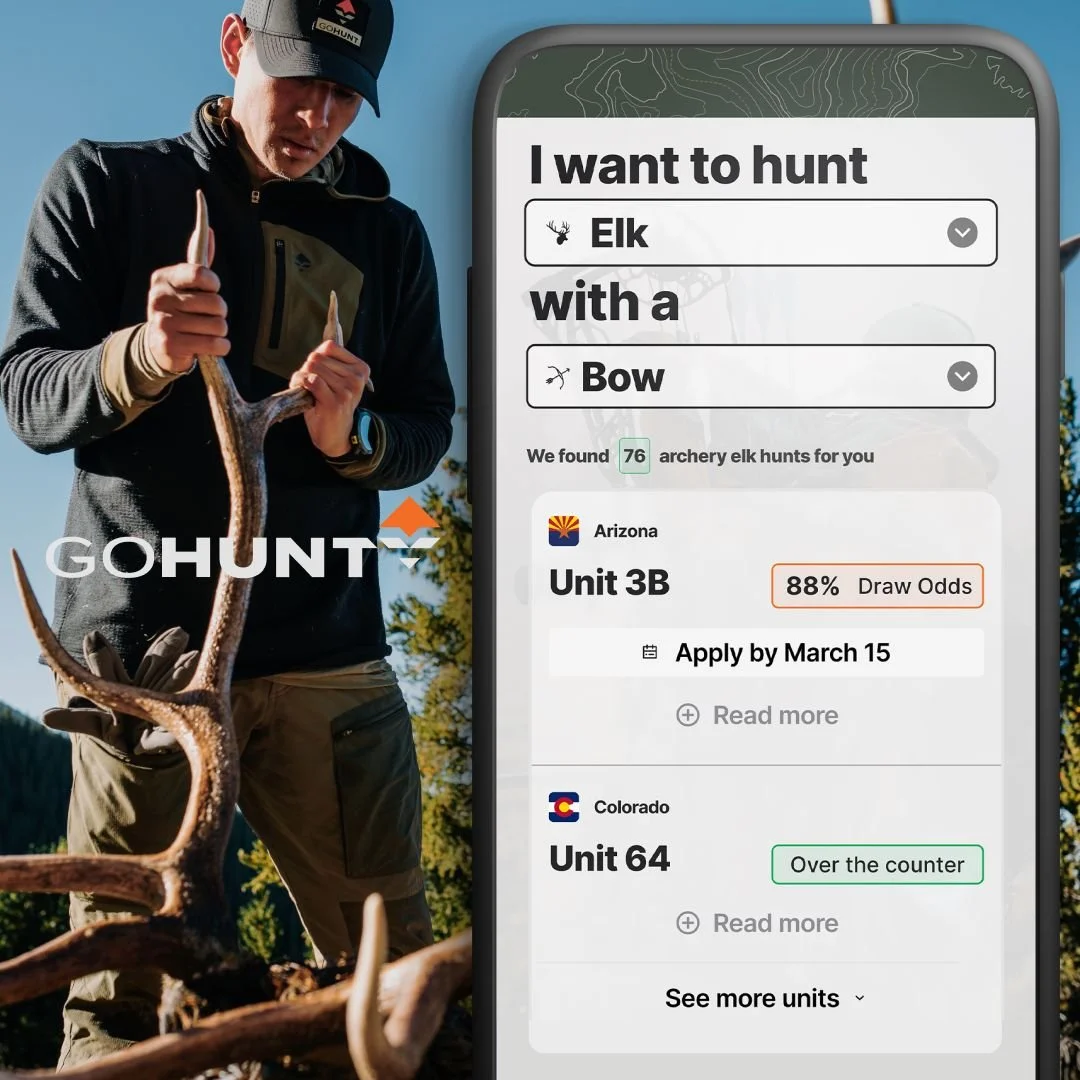
This is one of those states where a tool like GoHunt Filtering 2.0 can genuinely save you hours of time.
Not because it magically picks your unit for you, but because Montana has enough regional variation that you really do need to compare public land, harvest trends, access, trophy potential, and hunt style side by side. If you’re trying to decide whether Montana belongs in your 2026 mule deer plan, that kind of research matters more here than in a lot of states.
If you’re already planning to sign up for Insider or Insider Plus, you can use code DRAWNWEST and get $50 of free gear credit when you sign up for Insider or $100 with Insider+!
Final thoughts on Montana mule deer for 2026
Montana is still worth talking about. It is still worth considering. It is still one of the states that belongs in the broader mule deer conversation.
But I would not call it a no-brainer.
This is a state where expectations make all the difference. If you go in knowing Montana is more of an opportunity state than a premium trophy play, and you pick a unit that fits the type of hunt you actually want, there is still a lot to like here.
Have a plan, keep it simple, and don’t let old Montana reputation make the decision for you.
Next steps
If this helped, the next step is making sure you understand the Montana draw system before you apply. Preference points, bonus points, deer combo decisions, party applications, and tag return options can all change how this strategy looks. Start there next: Montana Draw System Explained
You can also browse the full Drawn West application guide library here: 2026 Application Strategies
And if you want these reminders and strategy updates without having to keep checking back, join the Drawn West newsletter!
Nevada elk draw odds are brutal. But if you’re already applying for mule deer or antelope, adding elk is a $19 lottery ticket for one of the best elk hunts in North America. Here’s how to think about it.