2026 Utah Antelope Application Guide
If you're already applying in Utah for elk or mule deer, there's a really easy decision sitting right in front of you.
Add antelope.
The 2026 deadline is April 23rd, same as every other limited entry species in the state. And if you're already buying that Utah hunting license, adding antelope is one of the cheapest and most overlooked plays in a western application strategy.
The Math Makes It Easy
Every nonresident applying in Utah is already paying for the 365-day hunting license. That's the big cost. Once you have it, adding an antelope bonus point runs you around $21. That's it.
If you time your 365-day license correctly — applying late in one year and early in the next — you can pull two full Utah application cycles out of one license purchase. That cuts your effective annual overhead on every species in half.
Utah's antelope points are a bargain when you're already in the system. And because Utah uses a hybrid bonus point draw — where some tags go to the top point holders and the rest are randomly allocated — you always have a chance of pulling a tag even in year one. I'd rather have my name in for a real hunt than just buy a point and sit out.
Where Utah Antelope Herds Stand Right Now
Utah doesn't show up in the same conversation as Wyoming, Nevada, or Montana when people talk about trophy pronghorn. That's fair. But there are still giant bucks roaming around the desserts of Utah.
A couple winters ago, Utah's antelope herds took a serious hit. Some units lost close to 80% of their animals, and fawn recruitment that year was basically zero. Because pronghorn need three to four years to grow into their best horns, that storm didn't just cost Utah one season — it created a several-year hangover on trophy quality.
Here's what's changed. The last two winters have been relatively mild, and antelope bounce back fast when conditions cooperate. That first full age class of post-storm bucks is just now hitting maturity, and horn growth is starting to look like Utah again.
A big part of that recovery story is Parker Mountain. Since the 1970s, nearly 6,000 pronghorn have been trapped there and relocated to other units across the state. Those relocation efforts paused from 2014 to 2024 while the herd rebuilt — but in 2025, it was finally strong enough to reopen. Utah transplanted 317 pronghorn from Parker Mountain into Cache, Mount Dutton, Ponce de Leon, South San Rafael, and the Southwest Desert. Statewide numbers are trending hard in the right direction.
Utah isn't back to early-2000s peak yet, but there are real 80-inch class bucks walking around multiple units right now.
What the Hunts Look Like
Most of Utah's antelope opportunity is rifle or archery, with a handful of muzzleloader tags in select units. The archery and muzzleloader hunts typically mean spot-and-stalk or water hole setups, which can be challenging in open country but still produce strong results when you put in the time.
Rifle tags fall in mid-September. Archery runs August into September. Both weapon types give you a crack at the rut, which makes Utah antelope hunting genuinely fun in a way a lot of states can't match.
Success rates across the better Utah units are excellent — rifle hunts often run 80–90%+ and archery sits somewhere between 50 and 80% depending on the unit. On top of that, antelope hunting is low impact. It's glassing from ridges and trucks, picking your stalk, and covering country. No 3,000-foot climbs every day. It's one of the most enjoyable hunts you can go on in the West.
The other thing I like about Utah antelope specifically is how little pressure it sees compared to elk and mule deer. Those two species dominate the Utah conversation. Antelope tags live in their shadow, so when you do draw a good pronghorn tag, you're often one of very few hunters in that country.
Units, Draw Odds, and Long-Term Strategy
I think about Utah antelope in two buckets: the high-end rifle hunts where you're hunting real 80-inch potential, and the mid-tier or alternative-weapon options where you can realistically get into a great hunt on a shorter timeline.
On the top end, four units stand out right now for 80-inch-class pronghorn — San Rafael North, Book Cliffs South, Fillmore–Oak Creek South, and Beaver. These are the hunts where you pair legitimate trophy potential with those 80–90% rifle success rates. The catch is that nonresidents are generally looking at 12–20 points before rifle odds in those units really lock in, and at low points you're talking somewhere in the 0.15–0.2% range climbing slowly each year.
That sounds like a long time for an antelope tag. But keep in mind — you're building toward this while also building points for elk and mule deer. The antelope points aren't replacing anything. They're just stacking.
Where it gets more interesting for people who want to hunt sooner is alternative weapons and mid-tier units. Muzzleloader in a premier unit can start around 1% and reach 100% draw odds in the mid-to-high teens on points — a lot faster than rifle. Parker Mountain with archery starts around 3% and steps up predictably from there, hitting 100% draw odds at roughly nine points. For a unit that serves as Utah's transplant source herd, the hunting is legitimately good and the odds are genuinely accessible.
For residents, Utah only allows one limited entry species per year. The standard advice still applies — prioritize elk or mule deer with your limited entry application first, then shift your focus to antelope once you're in the waiting period. Nonresidents can apply for all three every year, which is one of the bigger hidden advantages of hunting Utah as an out-of-stater.
How I'd Play It
If you're already buying the Utah license, here's how I'd approach it.
Apply for a real antelope hunt every single year you have that license active. Don't go points-only. Utah's hybrid draw means there's always a chance, and I'd rather take a swing.
For the first five to ten years, put your application into one of those top rifle units — San Rafael North, Book Cliffs South, Fillmore, or Beaver — and see if the random side of the draw treats you well. If you get lucky early, you've pulled one of the better antelope hunts in Utah for a fraction of the points it should take.
When you get into that eight-to-ten point range, take a good look at your options. If you want to hunt sooner, shift into archery or muzzleloader in a top unit, or move into Parker Mountain rifle, where 100% draw odds show up closer to 15 points. If you're patient and love giant pronghorn, stay the course on a top rifle unit and keep building.
Either way — if you're already in Utah for elk or mule deer, skipping antelope is leaving a really fun, high-success hunt on the table for $21 a year.
If This Guide Helped
If this breakdown helped, the best thing you can do is subscribe to the Drawn West Podcast and leave us a five-star review!
It's the number one way to help the show grow and makes sure you don't miss the rest of the Utah bonus series — elk and the once-in-a-lifetime species are still coming.
Never Miss a Deadline
Sign up for the Drawn West newsletter and get every state breakdown, bonus series episode, and deadline reminder sent straight to your inbox before the windows close.
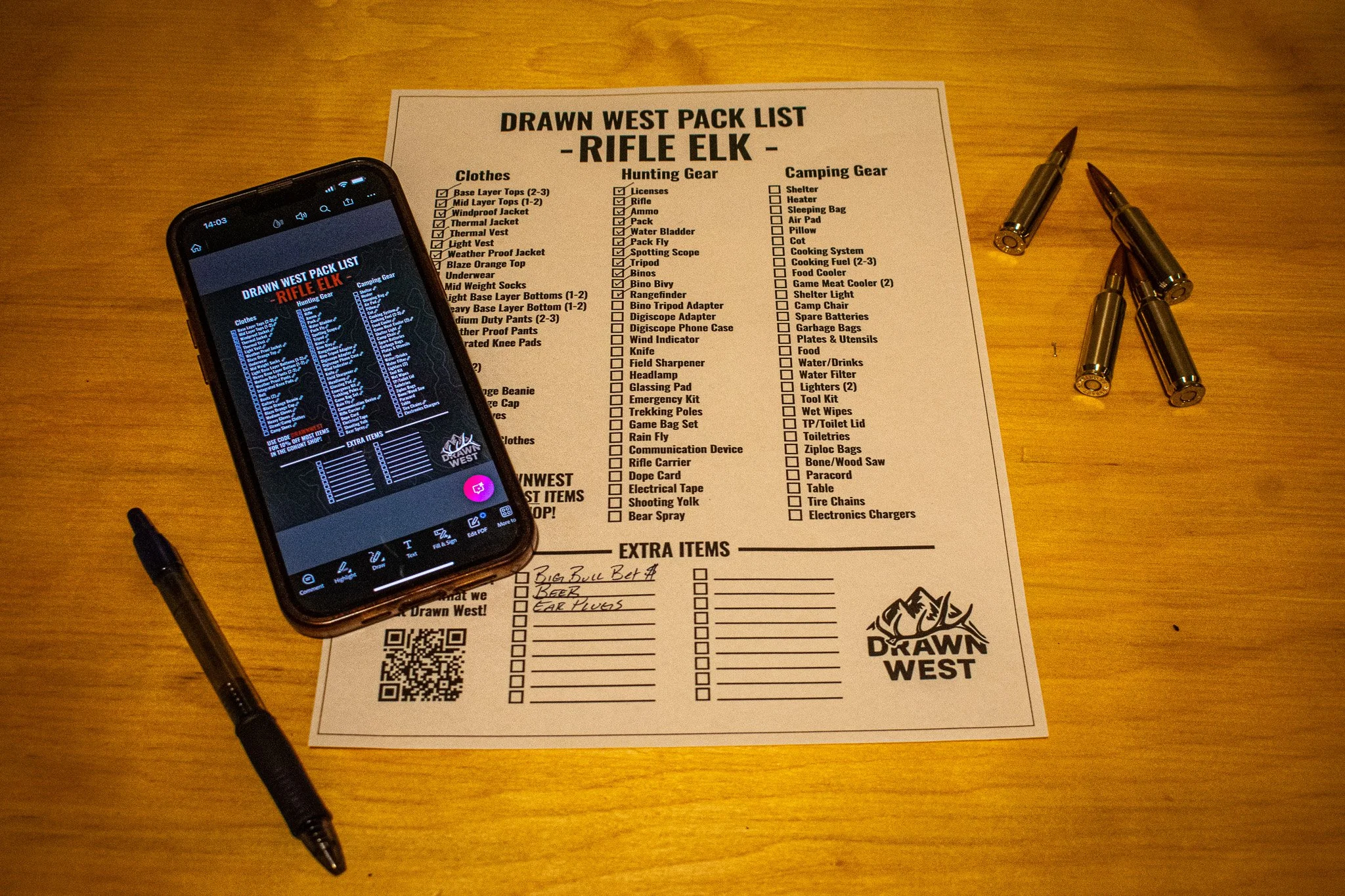
It’s hard to know what calls are worth putting in your pack, especially on your first hunt. Here's what's in my pack, why I run a diaphragm 3-pack as the foundation, and when to reach for backup options like the Hoochie Mama or EZ Estrus.