2026 Montana Elk Application Strategy: How the Draw Works and Where to Start
Montana is one of the core elk states in the West.
It has a big elk population, a ton of public land, and a real opportunity for non-residents to hunt elk regularly instead of waiting ten years for a tag.
It also has one of the most confusing application systems in the entire West.
There are two kinds of points. Two draw phases. A general tag that happens before limited entry. And a couple weird quirks in the system that make people second-guess their application every year.
So if you’ve ever looked at Montana and thought “this seems like a great elk state but I have no idea how the draw works” — you’re not alone.
This guide breaks down the Montana elk application for 2026, how the point system actually works, and how non-residents should think about building a strategy for this state.
This article comes from the Drawn West podcast episode covering the full Montana application breakdown.
The Montana Elk Application Deadline
Montana’s elk application deadline for non-residents is:
April 1 at 11:45 PM Mountain Time.
That’s the date you absolutely cannot miss.
Montana opens applications earlier than some other states, but the deadline comes up fast. If Montana is part of your elk plan for the year, you should be thinking about it well before April.
There’s also a rule change this year that matters quite a bit.
Montana now purges preference points if you skip applying as a non-resident.
That means you can’t just buy a point, sit on it for a few years, and come back later like people used to do.
Personally, I don’t love that rule. If you buy a point, that should be your point. But regardless of how we feel about it, that’s the system now, and it means you need to be intentional about applying if you already have points.
Elk Tag Prices in Montana
Montana is also one of the more expensive elk states for non-residents, and the prices went up again.
For 2026:
Elk tag: $1,112
Deer tag: $760
Big game combo (elk + deer): $1,312
For comparison, resident elk tags cost about $20.
That price difference is always a hot topic online. Residents obviously get a big advantage, and there’s always debate about how big that gap should be.
At the same time, non-residents contribute a huge amount of revenue to wildlife conservation in these states. So whether people want to acknowledge it or not, non-resident hunters are a big part of how the system is funded.
Montana is still worth looking at — you just need to understand the cost going in.
Two Montana Realities Hunters Should Be Aware Of
Before we even get into the draw system, there are two things that are part of hunting Montana that people should know about.
The first is grizzly bears.
Montana is one of the few elk states where grizzlies are legitimately part of the conversation. Southwest Montana near the Yellowstone ecosystem and northwest Montana near Glacier both have significant bear populations.
Most hunters never have a bad encounter. But it’s still something you should know about before picking a unit.
The second thing is chronic wasting disease.
CWD exists across Montana. Some areas show higher prevalence than others, and if that’s something you care about it’s worth looking into.
It also affects how some hunters handle animals after harvest. A lot of people now clean skulls or cape animals in camp so they’re not transporting restricted tissue across state lines.
Neither of these issues means Montana is a bad elk state. They’re just part of the landscape.
The Montana Elk Herd Is Actually In Good Shape
The good news is Montana’s elk herd has been doing pretty well.
Some of the harder winters that hit states like Wyoming, Utah, and Colorado in recent years didn’t affect Montana nearly as much. Because of that, the herd has been steadily rebuilding.
The estimate shared in the episode was around 157,000 elk statewide, which puts Montana back in a strong position compared to the last decade.
That doesn’t mean every unit is loaded with elk. It never works like that. But overall, Montana remains one of the better opportunity states if your goal is to actually hunt elk regularly.
Snowpack this winter has been moderate so far. If spring moisture shows up, habitat conditions could set up pretty well going into the season.
Why Montana’s Draw System Confuses Everyone
Montana has two different types of points, and that’s where most people get tripped up.
Preference points are used for the general elk license.
Bonus points are used for limited entry permits.
The important part is the order.
Montana first runs the draw for the general tag. After that, if you applied for a limited entry permit, the state looks at those applications next.
If you didn’t draw a general tag, your limited entry application basically disappears. You’re out. You also have the option to return your general tag if you don’t draw your limited entry permit - restoring both your points and your tag fee.
That’s why understanding the general draw is the most important piece for most hunters.
How Preference Points Work for Montana Elk
Preference points are used to draw the general elk tag.
This is technically a preference point system, meaning people with the most points draw first.
But Montana adds one twist that makes things a little weird.
They reserve 25% of general tags for applicants with zero points.
Because of that rule, the draw odds can look strange. Applicants with zero points actually have better odds than applicants with one point.
So the system ends up looking something like this:
Zero points — ~50% odds
One point — 0% odds
Two points — ~75% odds
Three points — 100% odds (for now)
That’s why Montana isn’t a state where you casually buy points without a plan.
You either want to hunt soon, or you want to build toward that two-to-three-point window where the draw becomes much more reliable.
The Biggest Decision First-Time Applicants Have to Make
If this is your first time applying in Montana, the biggest question is simple:
Do you buy the preference point or not?
The answer really comes down to whether you’re planning to hunt Montana this year or not. If you buy a preference point this year when you apply, you will not draw an elk tag. This option is only for hunters that are planning to hunt Montana next year, or the year after.
If you want to hunt Montana this year, don’t buy a point - but be warned - if you do not draw, next year you will be in the same position. This option is great for hunters who have other plans next year, whether that’s a different hunt, family conflicts, etc.
If you already have a preference point, then you might as well buy another this year so you go into the draw with 2 pts and ~75% chance of drawing. If you have two points already, buying a third will guarantee that you draw.
Clear as mud, right?
Limited Entry Elk Permits
Limited entry permits are where Montana’s biggest bulls typically come from.
Those permits run on a bonus point system, which means having more points helps your odds, but there’s still a random element involved.
Most of the best limited entry districts are in eastern Montana or the breaks country. These units can produce very large bulls, but they’re also difficult to draw and often include a lot of private land.
For most hunters, limited entry should be viewed as a long-term lottery while continuing to hunt general tags in the meantime.
Most Montana Elk Hunting Happens in General Units
One of the reasons Montana is such a good elk state is because most of the opportunity comes from general tags.
There are over a hundred general elk districts across the state, while limited entry permits only cover a much smaller portion of Montana.
That means this isn’t just a point-collecting state. It’s a place where you can actually hunt elk while slowly learning the country.
Over time, a lot of hunters end up developing a few favorite areas they come back to again and again.
That kind of consistency is one of the things that makes Montana special.
Where New Hunters Should Start Looking
If you’re starting your Montana research from scratch, the region most people begin with is Region 3 in southwest Montana.
That part of the state holds a large portion of Montana’s elk population and produces a lot of harvest every year. Regions 2 and 4 also deserve attention because they border productive country and offer plenty of public land.
From there, the best thing you can do is start narrowing down districts based on a few practical factors.
Annual harvest numbers
Amount of public land
Terrain and huntability
Bull-to-cow ratios
Any special regulations within the district
Once you identify a few promising districts, switch over to maps and really study them. Look at road access, steep terrain, timber cover, and areas where elk can escape pressure.
That’s where you start finding places that actually hunt well.
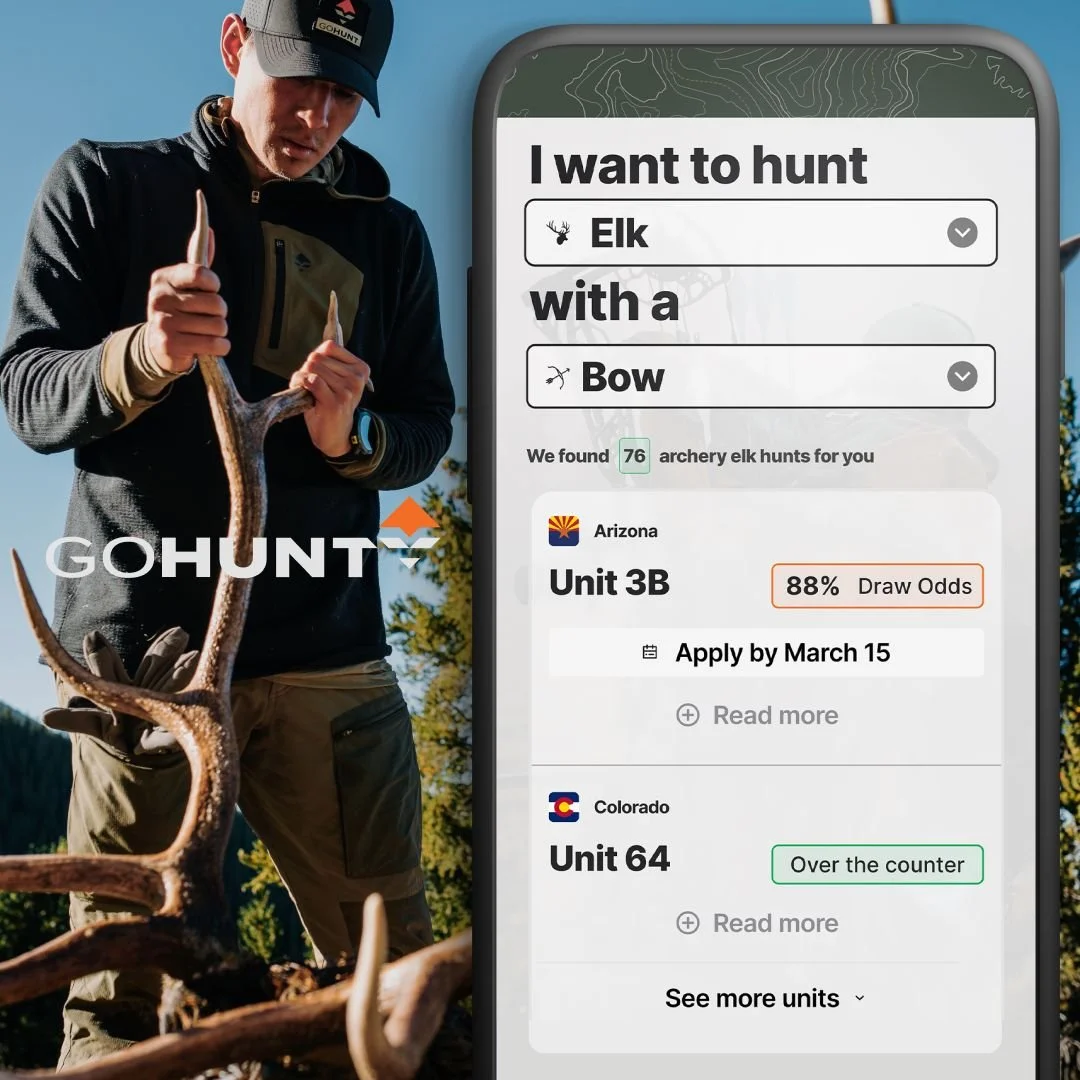
Looking for the perfect Unit?
GOHUNT’s Filtering 2.0 gives you all the data you need for EVERY UNIT across the west. Use it on both mobile and desktop to find your next hunt!
Use the code DRAWNWEST to get $50 of gear shop credit when you sign up for INSIDER to get all GOHUNT’s tools - Including Filtering 2.0!
Montana Is Managed for Opportunity
Montana isn’t managed primarily as a trophy state.
The goal is to provide hunting opportunity rather than limit tags in order to grow giant bulls everywhere.
That doesn’t mean big bulls don’t exist. They absolutely do, and every year hunters kill impressive elk in general units.
But the main advantage Montana offers is the ability to hunt elk more often, not just wait years for one perfect tag.
If your goal is to build experience, learn elk country, and develop a hunt you can return to, Montana is one of the best states for that.
Final Thoughts on the Montana Elk Application
Montana is a little chaotic.
The draw system is weird. The tags are expensive. The point structure takes some getting used to.
But it’s still one of the best elk states in the West for hunters who want real opportunity.
There are a lot of elk. A lot of country to explore. And a real chance to build a repeatable hunt over time.
If you treat Montana like a two-to-three-year strategy instead of a one-year gamble, the system starts to make a lot more sense.
Don’t Miss ANY Applications
Be the first to hear about application deadlines, new gear worth paying attention to, and occasional giveaways. Join 4,000+ hunters who get the Drawn West Newsletter and stay one step ahead of the season!


It’s hard to know what calls are worth putting in your pack, especially on your first hunt. Here's what's in my pack, why I run a diaphragm 3-pack as the foundation, and when to reach for backup options like the Hoochie Mama or EZ Estrus.