2026 Colorado Mule Deer Application Strategy
If you’re trying to figure out whether Colorado mule deer deserves a spot in your 2026 application plan, here’s the short version: yes, it absolutely should be on your radar.
If you’d rather listen to the 2026 Mule Deer Application Strategy, check out the podcast where we break all this down for you!
Colorado is my favorite state when it comes to Mule Deer - and after the hunt Abbey and I had in Southwest Colorado last fall, it probably always will be!
If you’re wonder why I love Colorado Mule Deer so much, or just want to see A TON of bucks - check out our 2025 Mule Deer Film!
Colorado still offers a pile of mule deer opportunity across a bunch of different point levels, and for non-residents especially, it remains one of the best states in the West to actually build a plan around. We cover a few things that matter more than people realize, like how Colorado’s true preference point system works, why second-choice strategy can still be worth looking at, and what the coming 2028 draw changes might mean if you’ve been sitting on a big stack of points.
This article is for the hunter who wants to make a smart Colorado mule deer decision this year, not just daydream about a giant buck unit for the next 20 years. If that’s you, let’s break it down.
Why Colorado still matters for mule deer hunters
Colorado has taken some hits in mule deer conversations over the last few years, and some of that is fair. Herd numbers have been declining over a longer timeline, and there are some management changes coming. But here’s the thing: it is still the king of non-resident mule deer opportunity.
There are still a lot of quality hunts. There are still big deer. There are still units spread across a bunch of point levels where you can put together a really good hunt without waiting forever. That matters, especially for the average hunter who is trying to burn vacation days wisely and actually get on the mountain instead of always playing the long game. The episode made that point pretty clearly: Colorado may not be perfect, but if you want to hunt mule deer consistently, it still belongs near the top of the list.
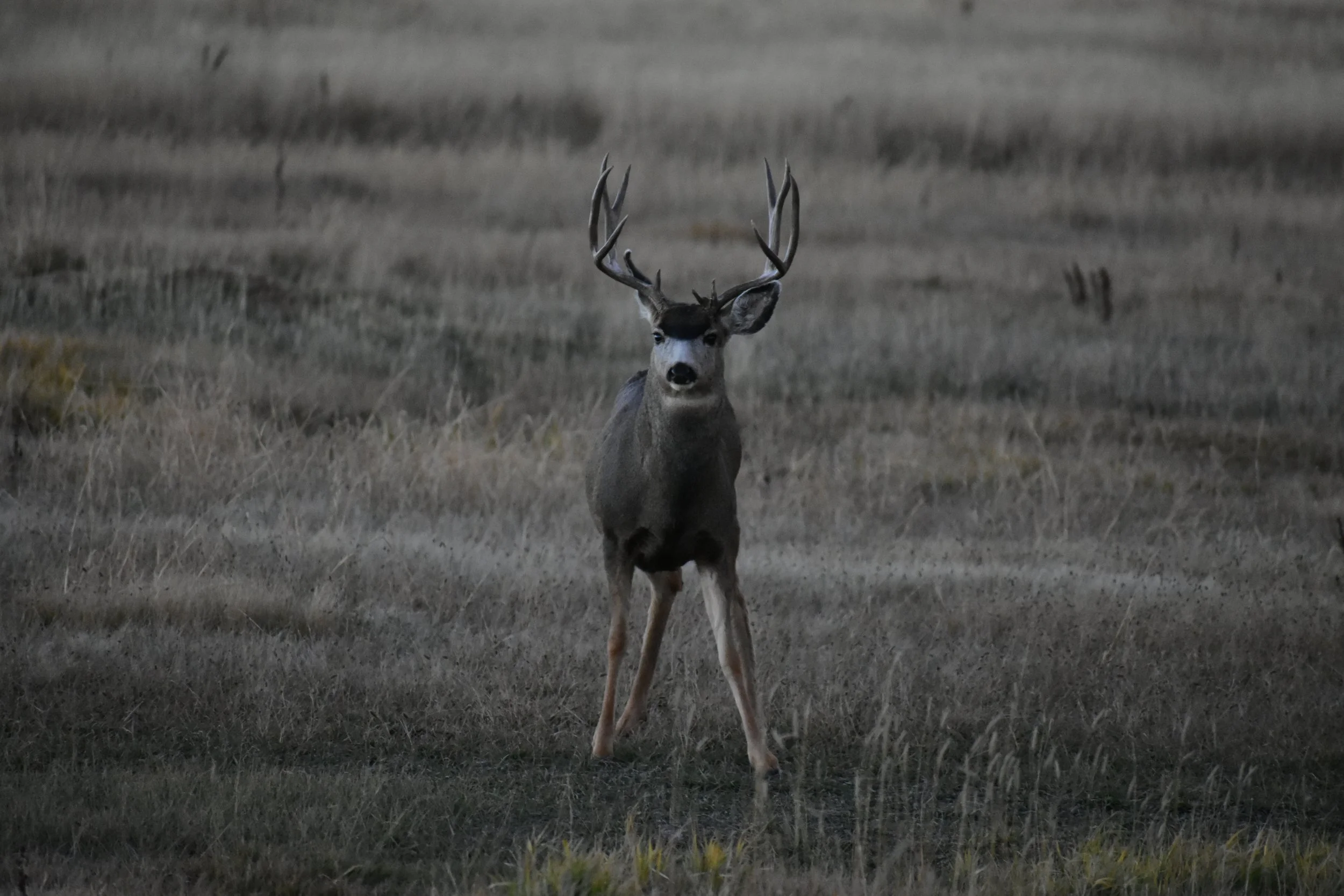
The Colorado mule deer deadline and point system, step by step
Colorado’s mule deer system is one of the easier western systems to understand once you slow down and look at it piece by piece.
It is a true preference point system. That means the hunters with the most points get the tags first. It is not random. It is not a bonus system. It is not one of those states where you stare at draw results and wonder what happened. In plain English, that makes planning easier. You can look at point requirements, compare hunts, and get a much better sense of whether you’re actually in range for the tag you want.
If you only want to build a point in 2026, you need to use Colorado’s deer point code as your first choice: D-P-999-99-P. If you apply for a valid first-choice license and don’t draw, you also earn a point automatically.
Reminder: There is no point only period for Colorado - if you want to build points, you have to do an application now.
How to use your four hunt choices in Colorado
Colorado gives you four hunt choices, but the reality is that almost all of the premium mule deer tags are going to disappear in the first round.
The draw looks at everyone’s first choice first, then second choice, then third, then fourth. Your preference points are only used if you draw your first-choice hunt. If you draw a second-, third-, or fourth-choice hunt, you keep building points.
That creates a lane for hunters who are willing to be flexible.
You might not find the best looking tag in the later rounds, but there can still be archery, muzzleloader, or tougher rifle opportunities hanging around. For the hunter who wants to get out there, learn a new area, and still keep building points, that can be a smart move. When I was a North Dakota resident I used the same strategy to build points for Antlered Mule Deer while still drawing Antlered Whitetail tags - it’s awesome when it works out!
Choose your hunting partners wisely in Colorado
Great hunting buddies are worth their weight in gold, but Colorado has a few rules to think about before inviting just anyone to deer camp…
First, Colorado will not over-allocate tags to make your group fit. So if there are only two non-resident tags left and your group has three people, your group is out. Second, everyone in the group has to apply for the same hunt choice. Third, the whole group goes into the draw at the point level of the lowest point holder in the group. If one buddy has one point and everyone else has three, the group goes in with one. Ouch
That doesn’t mean group applications are bad. It just means you better know what you’re giving up when you hit submit.
Colorado mule deer season And What To Expect
Archery and muzzleloader happen in September, when bucks are largely still in summer patterns and often higher on the mountain. Early rifle can still hit that same kind of window depending on the unit. Then the traditional rifle seasons start to shift things.
First rifle gives you first crack with a rifle at a majority of the bucks in each unit, but often before much of the rut activity. Second rifle can be tricky and weather-dependent, often catching mature bucks in transition between the summer range and the winter range. Third rifle starts to bring more rut activity into play, especially late in the season. Fourth rifle is the peak-rut window and usually the most coveted because of that.
Plains rifle is its own deal and is mostly a private-land conversation.
That’s a big part of picking the right hunt. Don’t just look at points and trophy potential. Ask what kind of hunt you actually want.
Is 2026 a good year to burn Colorado mule deer points?
Based on the winter we are seeing so far, there’s nothing about 2026 that screams “hold your points.” Snowpack has been below average across much of the state, and that can be a mixed bag. Lower snowpack usually means better winter survival, which is good. On the other hand, mountain units rely on that moisture for feed, so spring and summer moisture are still going to matter for antler growth and overall conditions.
What may be a bigger consideration is what Colorado has planned for 2028…
The big 2028 draw change and who it matters most for
Colorado has approved a major change starting in 2028, and this is where things get interesting.
Right now, deer tags are drawn through a pure preference point system. Beginning in 2028, the state plans to split the draw. Half the tags would still go to the highest preference point holders, and the other half would move into some type of weighted bonus-style draw. We don’t know the full details, but I expect something closer to a weighted random system rather than pure preference.
If you are sitting on a huge pile of points, that could change your strategy.
For hunters with 30-plus mule deer points, this change adds risk. Fewer tags would be guaranteed to clear the max-point pool, which means less certainty for people who have been building toward those top-end hunts for decades. My advice: if you’ve spent two or three decades building points for something special, you should at least think seriously about using them before 2028.
On the flip side, if you’re sitting in that five-, 10-, or 15-point range and dreaming of those top-tier units like 201, the split draw could eventually help you. Not because it guarantees anything, but because it at least cracks the door open a little.
The best Colorado mule deer strategy for most hunters
Yes, Colorado has elite units. Yes, there are hunts that can produce giant bucks. But for most hunters, the smarter move is not waiting forever. I recommend staying in the zero- to five-point range, especially if you’ve never hunted Colorado before. That gives you a chance to hunt more often, learn the state, and avoid turning Colorado into a once-in-a-lifetime tag you finally cash in when your knees are shot.
There are tons of great units under 5 points in Colorado, especially for Archery and Muzzleloader hunters.
Colorado mule deer units to start researching in 2026
This is not a “these are the best units, go apply” list. It’s a starting point. What’s more important is matching the unit to your goals, your points, and how you like to hunt. But these are some ideas.
Zero-point options
At zero points, there are still a lot of options. Some archery and muzzleloader hunts can offer surprisingly high trophy potential, especially if you’re willing to deal with private-land access issues in certain parts of the state. There are also public-land-focused units where the trophy ceiling may be lower, but the opportunity is still very good.
Units 24 and 34 look decent for hunters who care about public land and simply want a place to hunt with solid access and decent deer quality.
If you’re looking for a trophy buck and not afraid of a challenge, 7, 44, and 75 all offer the chance at a gross-boone caliber buck for archery or muzzleloader tags. Rifle hunters can check out 12, 16, and 18 for similar size deer.
Personally, I like to use Insider Filtering 2.0 to find units with the highest success rates instead of trophy potential. Units 72, 9, and 73 all offer rifle tags with nearly 50% success rates - those are my kinda units!
Three-point options
At three points, more rifle and archery possibilities start to show up. Units 44 and 67 on the archery side for hunters who want a higher-end spot-and-stalk type of experience with strong deer quality and decent public access. For rifle, units 74, 75, 71, and 65 start to look good with very solid mule deer potential, success rates, and public land.
Six-point options
Once you get to six points, you’ve already unlocked most of the archery and muzzleloader units, but a few more appealing rifle hunts start to come into play. 54, 55, and 65 are a few units where you can start combining strong public land, good rifle opportunities, and the kind of deer quality that gets people excited.
Ten points and beyond
At 10 points and up, your options expand mostly by season access. You start adding more quality rifle choices, especially in second and third rifle, before eventually getting access to more of the highly coveted tags as your points climb. Typically, this means getting access to more 1st Rifle and 4th Rifle tags - but the juice may not be worth the squeeze.
These 10 point units may not be worth the wait compared to what you can draw at lower levels, and you’re still a decade or more away from the top-tier units.
Top-end units
If you want the Northwest-corner type tags, including units like 1, 2, 10, and 201, you’re talking about a very long wait. These units are typically in the 25- to 30-point range for some of those better third- and fourth-season opportunities. Those are special hunts, no doubt, but waiting that long is a real tradeoff.
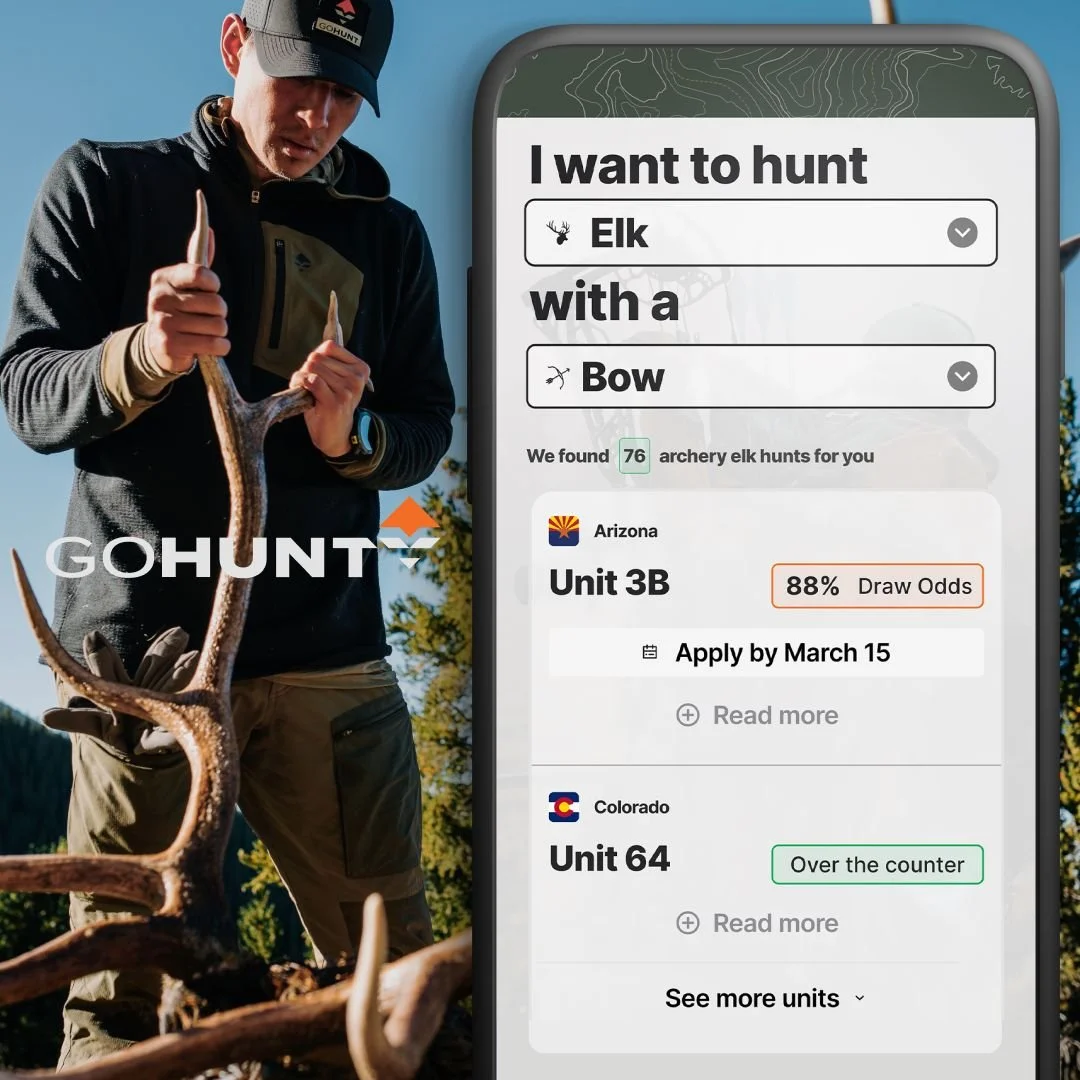
Looking for the perfect Unit?
GOHUNT’s Filtering 2.0 gives you all the data you need for EVERY UNIT across the west. Use it on both mobile and desktop to find your next hunt!
Use the code DRAWNWEST to get $50 of gear shop credit when you sign up for INSIDER to get all GOHUNT’s tools - Including Filtering 2.0!
So who should apply for Colorado mule deer in 2026?
Colorado is a great fit for a few types of hunters.
It makes a lot of sense for the hunter who wants to build a repeatable western plan. It makes sense for the hunter who values knowing their odds instead of swinging blind every spring. And it makes a lot of sense for the person who wants to mule deer hunt more often, not just someday.
If you’re sitting on max or near-max points, your decision is a little more urgent because of the 2028 changes.
If you’re newer to the state, the better lane is probably to start hunting the lower-point opportunities instead of trying to save your way into one perfect hunt 20 years from now.
Final thoughts on the 2026 Colorado mule deer draw
Colorado still gives mule deer hunters something a lot of states don’t: a real ability to plan.
For those of us with limited vacation, limited funds, and only so many falls to burn on long-shot dreams - building a plan and knowing if we will draw makes a big difference. Whether you’re building a point, chasing a better rifle hunt, or just trying to get your boots into Colorado for the first time, there’s still a lane here.
Have a plan, keep it simple, and don’t let the perfect tag keep you from going hunting.
If this article helped, the next move is to make sure you don’t miss the rest of the application deadlines and breakdowns as they roll out!

It’s hard to know what calls are worth putting in your pack, especially on your first hunt. Here's what's in my pack, why I run a diaphragm 3-pack as the foundation, and when to reach for backup options like the Hoochie Mama or EZ Estrus.