2026 Colorado Antelope Application Strategy
Every year when Colorado applications roll around, antelope kind of gets pushed to the side.
Most guys are thinking elk. Mule deer. Maybe even sheep or moose if they’re swinging big.
Antelope ends up feeling like an afterthought.
And I get it — Colorado isn’t exactly known for giant antelope. You’re not seeing it talked about the same way you hear about Wyoming or New Mexico.
But here’s the thing… if you look at it the right way, Colorado antelope can be one of the easiest ways to actually add a hunt to your fall without overcomplicating your entire plan.
Let’s walk through it.
Also Listen on:
Spotify | Apple
Start With This: Why Are You Even Applying?
Before you get into units, points, or anything like that, you’ve got to answer one simple question:
Are you already applying in Colorado?
Because if you are — for elk, deer, whatever — you’ve already paid the price of admission.
That $105 qualifying license is the hurdle for most people. Once that’s done, adding antelope isn’t a huge leap. It’s just another application, another option, another way to fill your fall.
That’s really how I look at Colorado antelope.
Not as the “main event,” but as something you layer into your plan.
If you’re still trying to figure out how to structure your entire season, this is where building a full application plan matters.
If you’re starting from scratch and only applying for antelope, it gets a little harder to justify. But if you’re already in the system, it’s one of the more affordable ways to add a western hunt.
What Colorado Antelope Is (and Isn’t)
Let’s just be honest about it.
Colorado is not a trophy antelope state.
Most of what you’re looking at is going to fall somewhere in that 70-inch range. You might run into something bigger, but if you’re holding out for 80+ inch goats, there are better places to focus your time and money.
That said, it’s also not a bad hunt.
The terrain is more diverse than people think. Sure, there’s plenty of flat agricultural ground in the eastern half of the state, but once you start getting into the western side, things change. You can end up hunting broken country, sage hills, even areas that feel closer to mule deer country than what you’d expect for antelope.
It’s just a different experience.
And honestly, that’s part of the appeal.
The Antelope Herd Is Coming Back
If you followed what happened a couple winters ago, you know how hard that 2023 winter hit a lot of western states.
Colorado was no exception.
The herd dropped from roughly 85,000 animals down to about 59,000 in a single year. That’s a big hit.
But the rebound has been pretty solid.
They’ve already climbed back into that low 70,000 range, and if that trend continues, you should see things keep improving over the next few seasons.
That doesn’t mean it’s suddenly going to turn into a top-tier trophy state. But it does mean you’re not buying into a declining situation.
And that matters when you’re deciding where to spend your time and money.
This Is Where Most People Get It Wrong
When people start looking at Colorado antelope, they usually jump straight to units and draw odds.
But they skip the one thing that actually drives most of the experience:
Access.
In Colorado, draw difficulty isn’t just about trophy potential. A lot of times, it’s about how much public land is available.
You’ll find units you can draw with zero points… but they might only have 5–10% public land.
So yeah, you drew a tag. But now what?
If you don’t have private access lined up or you’re not willing to knock on doors, that hunt can get tough in a hurry.
This is where doing your homework actually matters. Being able to sort units by public land, success rates, and draw odds in one place makes a massive difference.
If you’re trying to piece all of this together—different states, points, deadlines—it can get overwhelming pretty quick.
That’s exactly why I send out updates ahead of each state’s deadline with a breakdown of what’s coming up, key dates to know, and some strategy to think through your applications.
👉 Drop your email here and I’ll send you the next one.
Zero Points vs. A Few Years In
If you’re just getting started, here’s the reality:
At zero points, most of your options are going to lean toward archery or muzzleloader, and a lot of them are going to be in the eastern part of the state with limited public access.
That doesn’t mean you can’t make it work. It just means you need to go in with a plan.
If you’re willing to knock on doors or line up private access, there are opportunities there.
Where things start to change is around that three-point range.
Now you’re opening up more units in the central and western parts of the state where public land starts to look a lot better. You’re still not in top-tier country, but you’ve got options that are much more realistic for a DIY hunt.
By the time you hit that seven-point range, things shift again.
Now you’re starting to filter for better access, better success rates, and slightly better buck potential.
If you want a deeper breakdown of how Colorado works across species, check out our Colorado Mule Deer Strategy.
The Long Game (and Whether It’s Worth It)
This is where you’ve got to be honest with yourself.
Could you sit on Colorado antelope points for 20+ years and eventually draw a top-end unit?
Yeah, you could.
But should you?
Because when you start looking at that timeline — 20, 25, even pushing 30 years — you’ve got to ask what you’re actually getting in return.
It’s still an antelope hunt.
A good one, sure. But compared to what you could do with that same time in other states, it’s not always the best long-term play.
Personally, I tend to look at Colorado antelope more as a short- to mid-term opportunity.
Something you can draw, plan around, and go do.
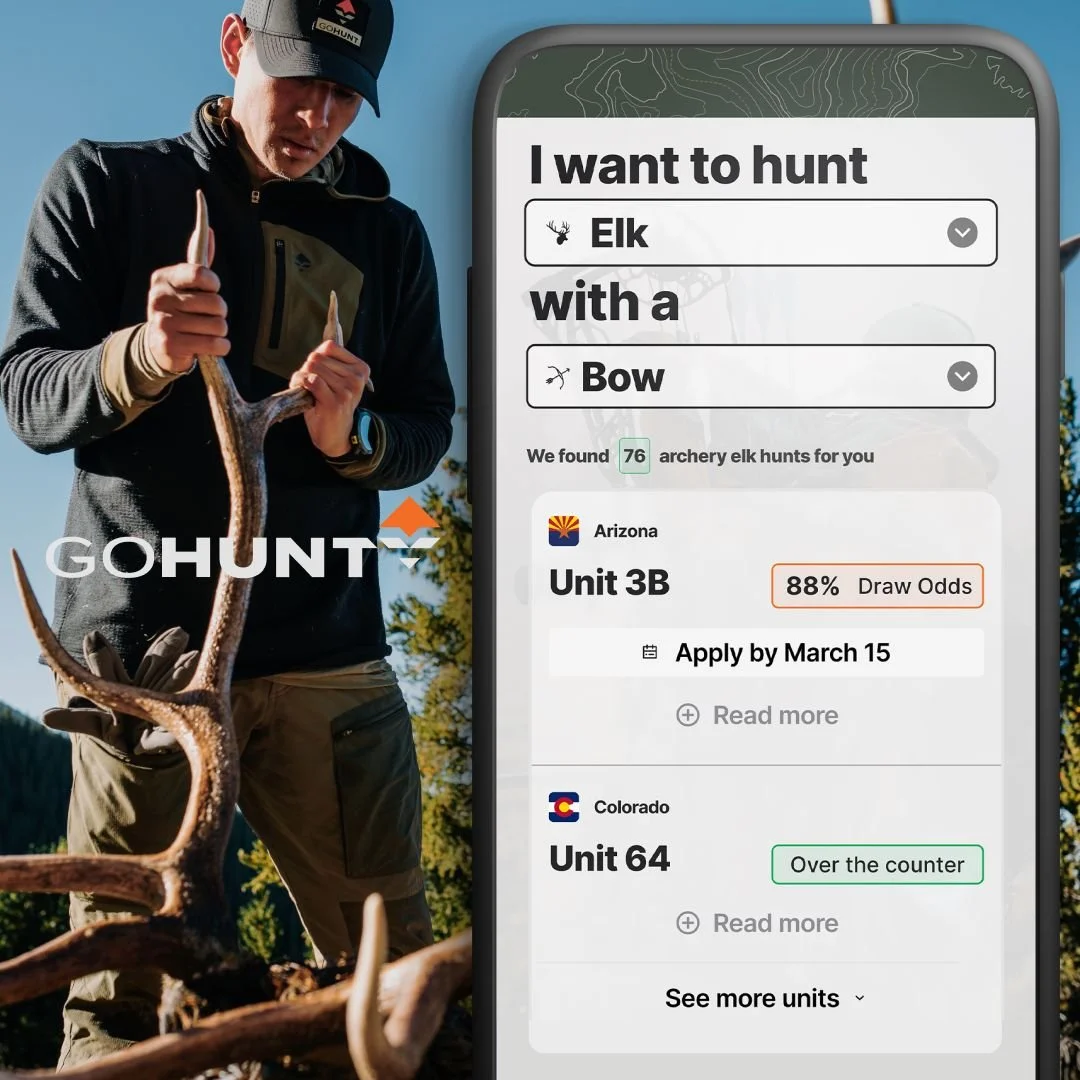
Looking for the perfect Unit?
GOHUNT’s Filtering 2.0 gives you all the data you need for EVERY UNIT across the west. Use it on both mobile and desktop to find your next hunt!
Use the code DRAWNWEST to get $50 of gear shop credit when you sign up for INSIDER to get all GOHUNT’s tools - Including Filtering 2.0
Opening Up More Opportunity (If You’re Willing)
One of the easiest ways to improve your odds in Colorado is to let go of the idea that it has to be a rifle hunt.
Most people default to rifle.
But if you’re willing to pick up a bow or run a muzzleloader, your options open up fast.
More units. Better access. Better odds.
It’s certainly harder — but it gives you more control over when you actually get to hunt instead of waiting years.
A Simple Way to Think About Colorado Antelope
If you only take one thing from this, let it be this:
Colorado antelope isn’t about chasing the biggest buck you’ll ever see.
It’s about adding another hunt to your season without making your life more complicated.
If you’re already applying in Colorado, it’s an easy add-on.
If you’re willing to be flexible, it gets even better.
And if you focus on access instead of just draw odds, you’ll avoid most of the problems people run into.
Where to Go Next
If you’re building out your Colorado plan, the next step is figuring out how this fits into your full season.
Start here: 👉 [Western Application Strategy Guide]
Then layer in your species-specific plans: 👉 [Colorado Elk Application Strategy]
Have a plan, keep it simple, and go do it.
There’s a lot to keep track of across all these states—and it only gets harder as you start stacking hunts together.
That’s why we started the Drawn West newsletter where we send out reminders of deadlines, news, and ofcourse first chance to enter our giveaways!
👉 If you want those, you can sign up here.
It’s hard to know what calls are worth putting in your pack, especially on your first hunt. Here's what's in my pack, why I run a diaphragm 3-pack as the foundation, and when to reach for backup options like the Hoochie Mama or EZ Estrus.