Best Elk Calls For Beginners
If you're putting together your first elk call setup — or just trying to figure out what's worth carrying and what isn't — this is the breakdown I wish someone had handed me early on.
There's no shortage of elk calls on the market, and most of them will make some kind of sound. But there's a difference between a call that makes noise and a setup that actually gives you the flexibility to work a bull through every stage of an encounter. I've landed on a handful of calls I trust and use consistently, and I'll walk through each one and tell you exactly why it's in my pack.
The Cornerstone Call: Diaphragms
If I could only carry one type of elk call, it would be a diaphragm — and it isn't close.
A diaphragm call, or mouth reed, sits on the roof of your mouth and lets you produce elk sounds using nothing but air and lip pressure. Cow calls, estrus screams, calf mews, bugles, chuckles — all of it is available from a single call, completely hands-free. When a bull is at 40 yards and you're at full draw, that hands-free piece matters more than anything else.
The other thing diaphragm calls give you is variation. Small changes in pressure, lip position, and airflow produce completely different sounds. You can get subtle and soft or loud and aggressive without ever switching calls. That kind of range is something no external call can match.
I run the Rocky Mountain Hunting Calls Diaphragm 3-Pack specifically because each reed in the pack sounds a little different. One might break into a bugle more naturally, another might sit better for higher cow talk, another might hit that deep raspy chuckle you want late in the rut. On top of that, every mouth is shaped a little differently — what works perfectly for me might not sit right for you, and having three reeds with slightly different profiles gives you a real chance to find the one that fits.
Most guys end up with a clear favorite out of the pack. That becomes their go-to, and the other two stay in rotation as backups or situational options.
Diaphragm calls take practice. That's just the truth of it. But putting in reps in the truck on the way to work pays off more than any other preparation I can think of for elk hunting. Once it clicks, you'll wonder how you ever hunted without it.
The Bugle Tube: How to Sound Like a Bull
The diaphragm is what makes the sounds — the bugle tube is what makes those sounds believable.
Without a tube, a bugle sounds thin. The tube amplifies and shapes the sound, adds volume, and creates that deep resonant quality that makes a bull bugle sound like it's coming from an actual animal. You put the diaphragm in your mouth, bring the tube up to your lips, and suddenly you have the full range of bull sounds available — bugles, chuckles, glunks, lip bawls — all still hands-free.
This combination — diaphragm paired with a bugle tube — is my favorite way to bugle in a bull. When a bull is fired up and you need to hold a conversation with him at close range, nothing works better. It also sets up well for a two-person calling scenario where one person can hold the bull's attention while the shooter gets into position.
The Rocky Mountain Hunting Calls Bugle Tube pairs naturally with the same diaphragm reeds already mentioned, which is part of why I run this setup. It's a system that works together.
The EZ Estrus: A Dedicated Cow Call Option
If you want a call built specifically to produce a realistic estrus cow sound, the Phelps EZ Estrus is worth having in your pack.
This is an external reed call — you don't need a diaphragm to run it. You blow into the call and it handles the work, producing a convincing, nasally estrus sound that's hard to replicate on a mouth reed until you've put in significant practice time.
Where it gives ground compared to the diaphragm is flexibility and hands-free operation. You need one hand to run it, and the range of sounds it can produce is limited. It does one thing very well and not much else beyond that.
I reach for it in situations where I want a precise, convincing estrus sound and the setup allows for it — not as a replacement for the diaphragm, but as a complement to it. For hunters who are still early in their diaphragm learning curve, it can also serve as a reliable bridge call while those skills develop.
The Hoochie Mama: A Reliable Backup
The Primos Hoochie Mama is one of the most recognizable cow elk calls out there, and there's a reason it's been around as long as it has.
It's simple to use, produces a consistent cow sound, and doesn't require any mouth technique. You squeeze it and it sounds like a cow elk. For a hunter who hasn't yet put in the time with a diaphragm, it can be a real confidence builder in the field.
That said, I treat it as a backup rather than a primary call, and here's the honest reason why.
The Hoochie Mama sounds almost too consistent. In areas with hunting pressure, elk have heard that call — a lot. The sound is distinctive enough that educated bulls in pressured country will sometimes shut down when they hear it. It's also a one-trick call. Every squeeze sounds basically the same, and real elk don't communicate that way. They vary their cadence, their volume, their pitch. The diaphragm can do all of that. The Hoochie Mama can't.
In lower-pressure country, or as a failsafe for someone who struggles with diaphragm calls, it absolutely earns its spot in the pack. Just be aware of its limitations before you lean on it in the wrong situation.
One Accessory Worth Adding
Diaphragm calls are made of thin latex. Leave them loose in a pocket or the bottom of a pack and they get contaminated, folded, or ruined faster than you'd expect. Accidently drop one in the dirt, and now you’re trying to make a bugle while picking sand out of your teeth. We have all been there, if you haven’t yet, you will.
The GoHunt Call Holder keeps your reeds clean, dry, and protected when you're not using them. Between calling sequences you're moving fast — the last thing you want is to reach for a call and find it unusable.
If you're going to invest in quality diaphragm calls, a case that keeps them ready to use is a small addition that makes a real difference over the course of a season.
Putting the Setup Together
Here's how I'd approach building this out depending on where you're at.
If you're starting from scratch and want the most versatile long-term setup, the Rocky Mountain Hunting Calls Diaphragm 3-Pack paired with a bugle tube covers everything. Put in the practice time with the reeds and you'll have a calling system that can handle any situation elk hunting throws at you.
If you want a dedicated cow call that sounds great right out of the box — especially while you're still developing your diaphragm skills — add the Phelps EZ Estrus.
If you want a simple, reliable backup, the Hoochie Mama fills that role.
And regardless of what calls you carry, the call holder is worth adding. Your diaphragms will last longer and be ready when you need them.
Rocky Mountain Hunting Calls Diaphragm 3-Pack:
[https://www.getdrawnwest.com/go/elk-101-diaphragm-3-pack]
[Rocky Mountain Hunting Calls Bugle Tube:
www.getdrawnwest.com/go/rocky-mountain-bugle-tube
Phelps EZ Estrus:
[www.getdrawnwest.com/go/phelps-ez-estrus]
Primos Hoochie Mama:
[www.getdrawnwest.com/go/hoochie-mama-cow-call]
GoHunt Call Holder:
[www.getdrawnwest.com/go/gohunt-diaphragm-wallet]
Keep Hunting Smarter
Gear is only part of the equation. If you want to go deeper on elk hunting strategy — how to read pressure, when to call aggressively versus back off, and how to put yourself in position to use these calls effectively — that's exactly the kind of thing we cover on the Drawn West Podcast.
If you're not subscribed yet, that's the best next step. We dig into the decisions behind the hunt — the planning, the strategy, and the lessons from the field — and elk calling comes up more often than almost any other topic.
FOLLOW DRAWN WEST
Follow the podcast on your favorite platform and stay up to date on every new episode.


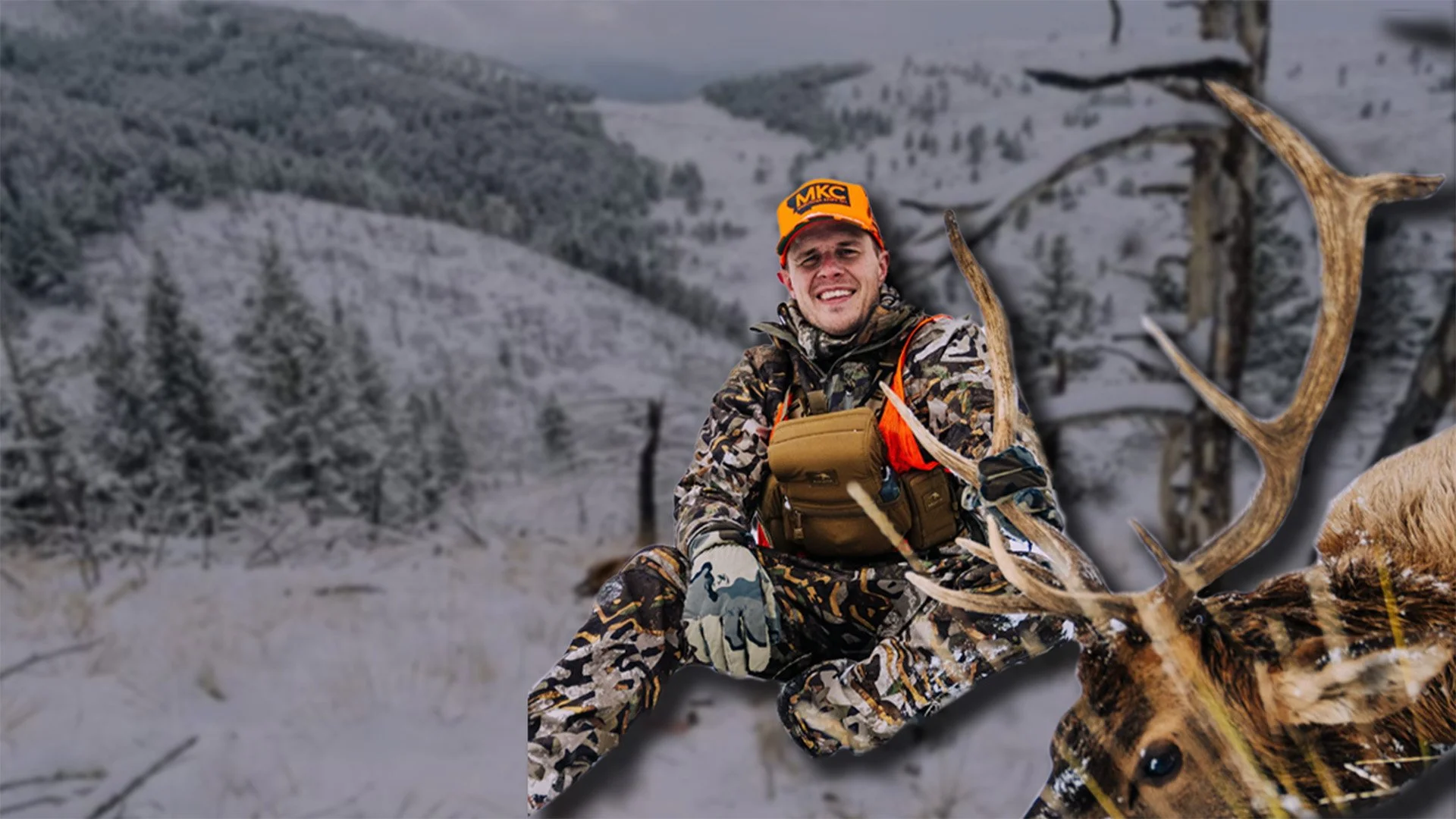

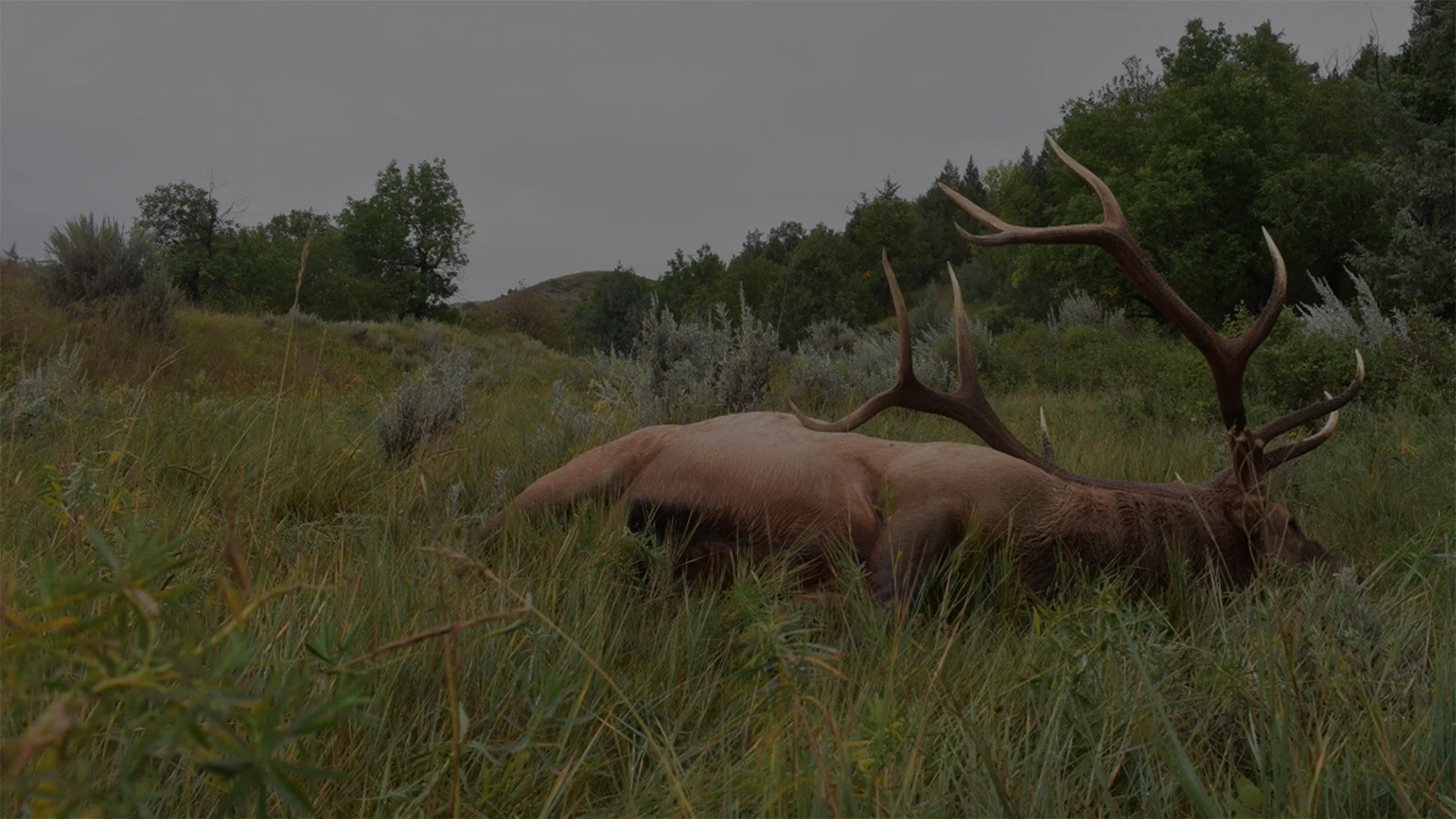


It’s hard to know what calls are worth putting in your pack, especially on your first hunt. Here's what's in my pack, why I run a diaphragm 3-pack as the foundation, and when to reach for backup options like the Hoochie Mama or EZ Estrus.